
Delhi's Pollution Crisis: Shocking PM2.5 Levels Exposed Post-Diwali
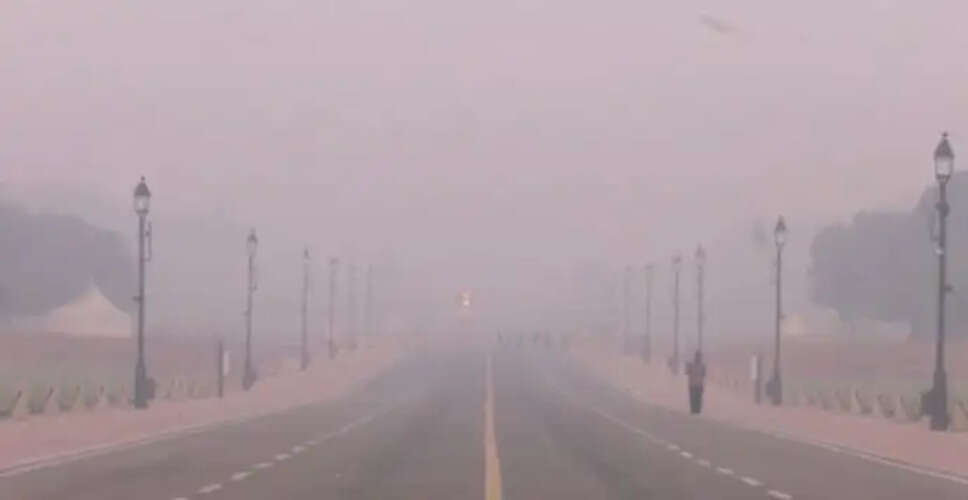

Severe Air Quality Issues in Delhi
New Delhi: Between Diwali 2025 and Diwali 2026, excluding the festival days, Delhi experienced an alarming annual average PM2.5 level of 94 micrograms per cubic meter, which is over double the national limit. This statistic positions Delhi as the most polluted capital among 24 analyzed by a local think tank. Data from Envirocatalysts revealed that PM2.5 levels exceeded the 24-hour national standard of 60 micrograms per cubic meter for 201 days. The annual average PM2.5 concentration in Delhi was found to be 2.3 times higher than the national annual standard of 40 micrograms per cubic meter and a staggering 18.7 times above the World Health Organization's recommended annual guideline of 5 micrograms per cubic meter.
On Diwali night, the city recorded a peak hourly PM2.5 concentration of 584 micrograms per cubic meter between midnight and 1 am on November 9. The 24-hour average for the festival day reached 257 micrograms per cubic meter, increasing to 266 micrograms per cubic meter the next day. An analysis of data from 24 state and Union Territory capitals indicated that 10 cities surpassed the national PM2.5 standard, with Jaipur following Delhi at 54 micrograms per cubic meter, and other cities like Lucknow (52), Kolkata (48), and Patna (47) trailing behind.
Interestingly, the pollution levels on regular days in several capitals were found to be higher than the average on Diwali. In Delhi, there were 14 days throughout the year where PM2.5 levels exceeded the average recorded on Diwali. This data suggests that the two days of the festival contributed minimally to the overall annual pollution exposure. In the median capital, the combined PM2.5 exposure from Diwali day and the following day accounted for only about 1.2 percent of the yearly total, with no city exceeding 2.5 percent. The majority of pollution exposure—97-99 percent—stemmed from various sources including vehicles, construction dust, industrial emissions, power plants, open waste burning, household fuels, crop-residue fires, and regional pollution.
The analysis also noted that Delhi's monthly average PM2.5 levels for November and December 2025 were above 210 micrograms per cubic meter, nearing the pollution levels recorded on Diwali. Among the 24 capitals, nine reported peak hourly PM2.5 concentrations exceeding 500 micrograms per cubic meter on Diwali night, with Puducherry experiencing the highest peak at 842 micrograms per cubic meter, followed by Dehradun (788), Bhopal (700), Chandigarh (638), and Agartala (615).