
Delhi's Air Quality Remains Poor Amid New Pollution Control Measures

Current Air Quality Status in Delhi
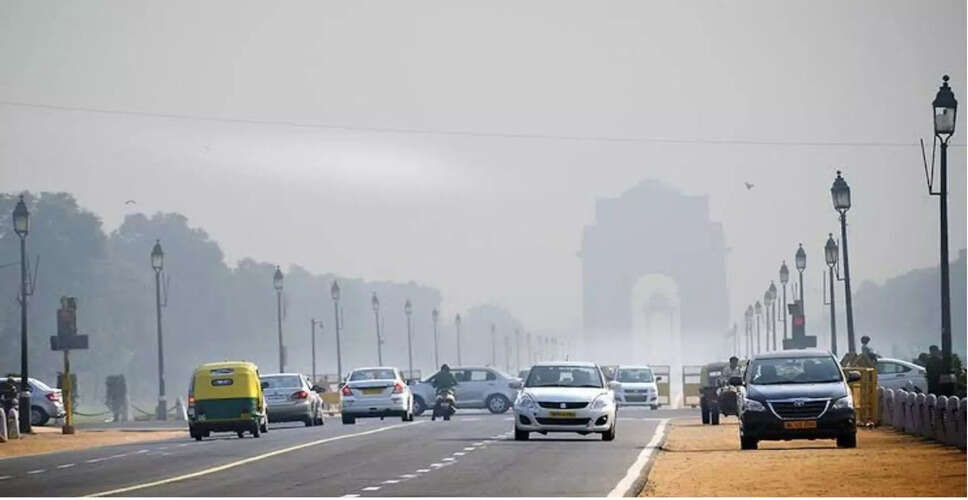
Representational Image(Photo: @Indianinfoguide/X)
New Delhi, Nov 23: On Monday, Delhi's air quality was classified as 'poor', with the Air Quality Index (AQI) reaching 236 at 8 a.m., as reported by the Central Pollution Control Board (CPCB). The primary pollutant continues to be PM2.5.
Multiple monitoring stations throughout the capital indicated AQI levels within the 'poor' range, while some areas experienced 'very poor' air quality.
Specific AQI readings from various locations included Burari (239), Karala (245), Nangloi (229), Maidan Garhi (237), Ghummanhera (253), Chhawla (272), Uttam Nagar (276), NIH Narela (256), Talkatora Garden (317), Aya Nagar (296), CRRI Mathura Road (296), Punjabi Bagh (283), Shadipur (288), Pusa (196), Sirifort (333), Commonwealth Sports Complex (293), JNU (288), Burari Crossing (295), North Campus (281), R.K. Puram (254), ITO (301), Anand Vihar (236), DTU (271), Mundka (279), Sri Aurobindo Marg (244), Jahangirpuri (272), Rohini (253), Bawana (275), and Narela (240).
New Measures to Combat Air Pollution
This situation arises as the Commission for Air Quality Management (CAQM) has introduced a more stringent accountability framework aimed at decreasing pollution levels in the National Capital Region (NCR) by 15 to 20 percent by 2027.
Despite the current 'poor' air quality, Delhi's Chief Minister Rekha Gupta has claimed that the overall air quality has significantly improved compared to a decade ago.
Forecasts from the Air Quality Warning and Integrated Decision Support System for Emissions - Delhi (AIRWISE-Delhi) suggest that the air quality will likely remain in the 'poor' category from Monday through Wednesday, with potential fluctuations between 'poor' and 'very poor' over the next six days.
Currently, Stage II of the Graded Response Action Plan (GRAP) is active across Delhi-NCR. This stage includes measures such as mechanized road cleaning, dust suppression, water sprinkling, and stricter enforcement of dust-control regulations at construction sites. Additionally, restrictions on personal vehicle usage are part of the strategy to mitigate pollution.
Long-Term Strategies for Pollution Control
In a proactive step towards long-term solutions, the CAQM has instructed the governments of Delhi and neighboring NCR states to develop comprehensive and outcome-focused State Action Plans for 2027.
The Commission has specified four essential requirements for these plans. For the first time, states are required to create dedicated district-level action plans as part of their overall pollution control strategies.
This framework also emphasizes measurable pollution reduction targets rather than just listing activities. States must aim for a minimum 15 percent reduction in overall pollution levels, with an ambitious goal of achieving up to 20 percent.
To ensure accountability, the plans will name specific officers responsible for implementing the measures and meeting the established targets.
Furthermore, the CAQM will recommend additional interventions based on past enforcement data and emerging environmental challenges, which state governments must integrate into their final action plans.