
Delhi's Air Quality Remains Poor Amid Forecasted Improvements
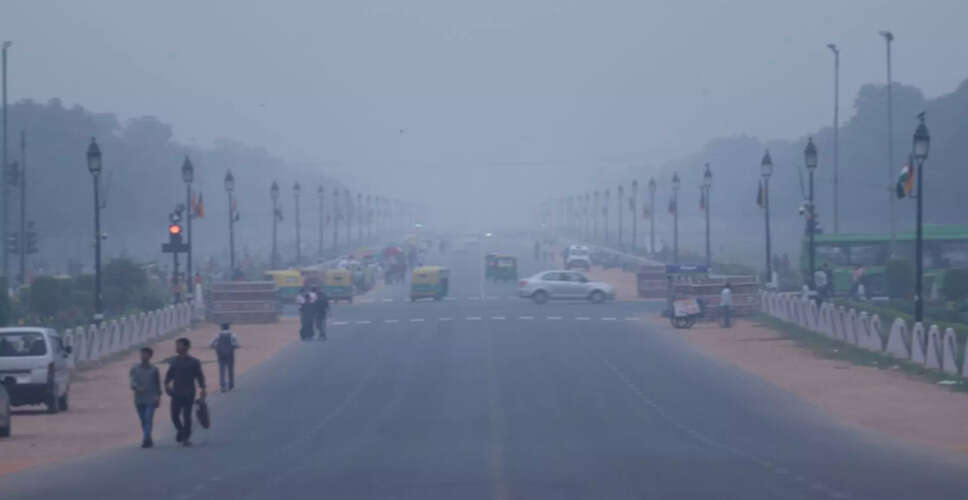

Current Air Quality Status in Delhi
Representational Image
New Delhi, Nov 11: On Wednesday morning, the air quality in Delhi was categorized as 'very poor', with the overall Air Quality Index (AQI) recorded at 308 at 8:40 a.m. However, improvements in air quality are anticipated in the coming days due to expected increases in wind speeds.
Out of 59 air quality monitoring stations that provided data on Wednesday, 29 indicated 'very poor' air quality, while the rest were classified as 'poor'. Notably, no stations reported 'severe' air quality levels.
Stations with 'very poor' AQI readings included Burari (319), Chhawla (398), NIH Narela (356), Talkatora Garden (333), NSUT Jaffarpur (351), Badarpur (312), Punjabi Bagh (343), Sirifort (321), Pusa (361), NSIT Dwarka (352), Chandni Chowk (383), ITO (369), Wazirpur (323), and Jahangirpuri (324).
Other areas such as Karala (220), Ghoga (263), Nangloi (274), Maidan Garhi (277), Tikri Kalan (276), Ghummanhera (279), Dwarka Sector 8 (294), Bawana (306), and Narela (267) showed varying pollution levels.
The Central Pollution Control Board (CPCB) classifies AQI levels as follows: 0-50 is 'good', 51-100 is 'satisfactory', 101-200 is 'moderate', 201-300 is 'poor', 301-400 is 'very poor', and 401-500 is 'severe'.
In response to media inquiries regarding AQI reporting during and after Diwali, the CPCB clarified that discrepancies between AQI figures on private applications and its official platform arise from differences in pollutant concentration measurements and calculation methods, not from under-reporting.
Following the Diwali festivities on November 8, India ranked high in global pollution statistics, with 93 cities listed among the world's 100 most polluted, according to data from AQI.in released on November 9.
Additionally, the India Meteorological Department (IMD) has predicted fog or mist during early mornings in Delhi from November 11 to 16. The maximum temperature is expected to hover between 28 and 29 degrees Celsius, while minimum temperatures are likely to range from 14 to 16 degrees Celsius.
On November 11 and 12, the maximum temperature is projected to be around 28 degrees Celsius, with minimums between 15 and 16 degrees Celsius. From November 13 to 15, maximum temperatures may rise to 29 degrees Celsius, while minimum temperatures are expected to remain stable between 15 and 16 degrees Celsius.