
Delhi's Air Quality Plummets Post-Diwali, Reaches Severe Levels
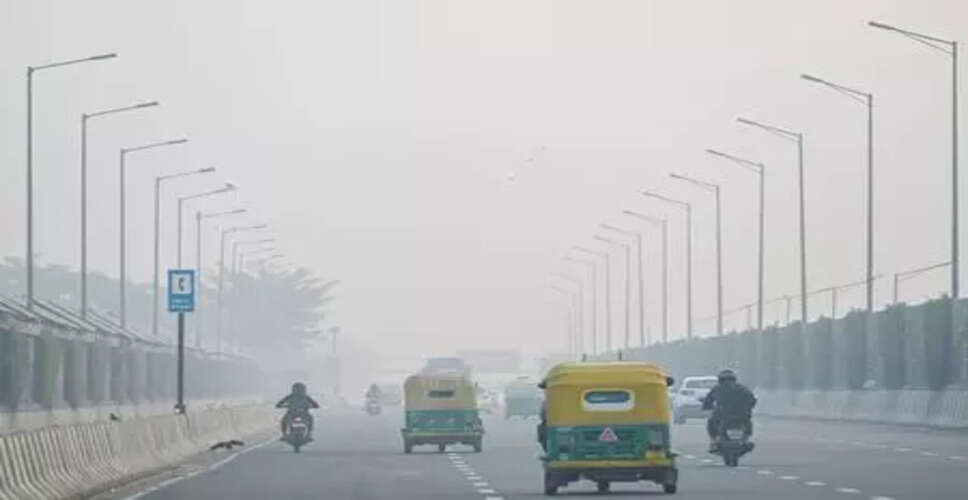

Severe Air Quality Deterioration in Delhi
Photo: IANS
New Delhi, Nov 9: A dense grey fog enveloped Delhi on Monday morning, following Diwali celebrations, causing visibility issues and elevating the city’s Air Quality Index (AQI) to 370, which is nearly classified as ‘severe’.
The monitoring stations at DTU and Burari Crossing reported the most alarming air quality, each recording an AQI of 437. Four additional stations indicated ‘poor’ air quality, while the rest fell into the ‘very poor’ category.
The Central Pollution Control Board (CPCB) categorizes AQI levels as follows: 0-50 is ‘good’, 51-100 is ‘satisfactory’, 101-200 is ‘moderate’, 201-300 is ‘poor’, 301-400 is ‘very poor’, and 401-500 is ‘severe’.
Areas such as Bawana, Burari, Jahangirpuri, Sonia Vihar, Punjabi Bagh, Okhla, and Rohini continued to experience ‘severe’ air quality.
The Air Quality Early Warning System predicts that Delhi’s air quality may remain in the ‘severe’ category throughout the day and persist in that state for several days ahead.
Contributing factors to this decline include adverse weather conditions, vehicle emissions, and stubble burning from nearby states.
With a ventilation index below 6,000 square meters per second and an average wind speed under 10 km/h, the conditions are not conducive for the effective dispersal of pollutants, as per the Air Quality Early Warning System.
On Diwali night, despite restrictions, firecrackers were extensively used across the city. Twenty monitoring stations reported ‘severe’ air quality, with Sonia Vihar recording the highest AQI at 463, followed closely by Jahangirpuri at 450.
The average AQI for the city reached 376 on Sunday night. Out of 59 monitoring stations that provided data at 10 PM on Diwali, 20 were categorized as ‘severe’, six as ‘poor’, and the remaining 33 as ‘very poor’.
Firecracker activity surged around 5-6 PM on Sunday, particularly in areas like Pitampura, Burari, Mayur Vihar, and parts of Lutyens’ Delhi. As the celebrations intensified, smoke began to accumulate over streets and residential areas.
Residents in various neighborhoods reported a strong odor of burnt fireworks, decreased visibility, and breathing difficulties as the fireworks continued late into the night.