
Delhi University Elections: What Issues Will Shape the DUSU Campaign This Year?
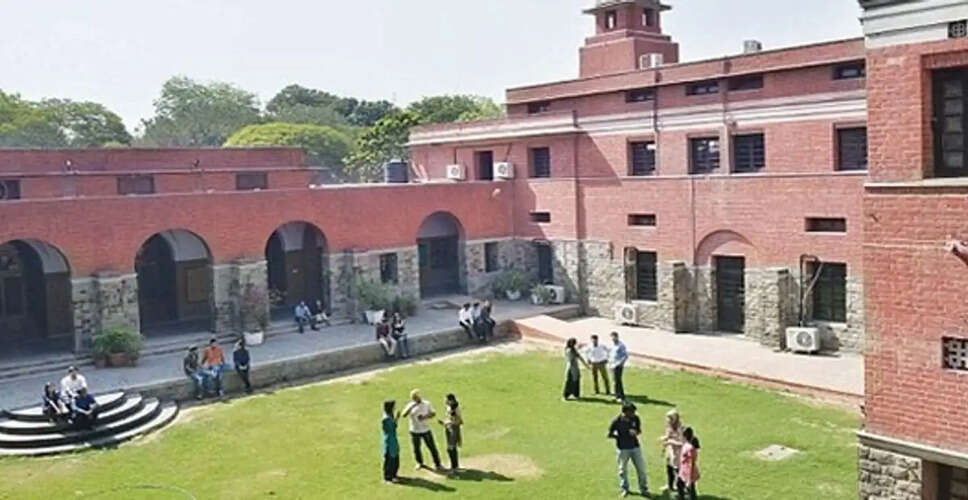

Upcoming DUSU Elections Set for September 18
In New Delhi, the Delhi University Students' Union (DUSU) elections are scheduled for September 18, with the counting of votes to take place the following day. The university has set September 10 as the deadline for candidates to file their nominations.
This announcement has provided student organizations with a clear timeline to transform their recent mobilizations into effective election campaigns, with increased outreach expected across various colleges in the upcoming weeks.
Recent protests at Jantar Mantar, focusing on issues related to the National Testing Agency (NTA), admissions, and educational access, have set the stage for these elections.
Student groups indicate that a new wave of students, often referred to as Gen Z, are voicing concerns that extend beyond traditional campus issues, addressing topics like affordability, job opportunities, access to higher education, examination systems, and daily commuting challenges.
Anjali, the secretary of the All India Students' Association (AISA), mentioned that the mobilization at Jantar Mantar could pave the way for a broader coalition among Left-leaning student organizations.
"We have a common adversary, as highlighted by the recent protests at Jantar Mantar. We hope to form a Left alliance between AISA and SFI similar to last year, to uphold the values demonstrated during the recent student protests," she stated.
AISA's demands include the repeal of the National Education Policy and the disbandment of the NTA, with leaders suggesting that the DUSU campaign will closely address the issues raised by students.
For the Congress-supported National Students' Union of India (NSUI), concerns regarding admissions, seat availability, and metro fare concessions are expected to be central themes.
A DU activist affiliated with the NSUI noted the ongoing "chaos" surrounding seats and courses, emphasizing that recent protests and hunger strikes have shown students' capacity to rally around their demands.
"These persistent issues will certainly be addressed. Currently, potential candidates are visiting colleges to gauge the most pressing concerns among students," the activist remarked.
The RSS-backed Akhil Bharatiya Vidyarthi Parishad (ABVP) is also evaluating college-level issues before finalizing its campaign strategy, focusing on matters that impact students' academic and campus experiences.
The upcoming elections will serve as a significant test for student organizations following the recent protests, determining whether the issues highlighted can translate into electoral success.
The nomination process will commence on September 10, allowing candidates to submit their papers along with a Rs 500 demand draft and affidavits until 3 PM. Scrutiny will occur at 3:15 PM, followed by the publication of the list of nominated candidates by 6 PM.
Candidates can withdraw their nominations until noon on September 11, with the final list expected to be released by 5 PM.
Voting for day classes will take place from 8:30 AM to 1 PM, while evening classes will vote from 3 PM to 7:30 PM.
In the previous elections, the ABVP secured three out of four central panel positions, including the presidency, while the NSUI claimed the vice-presidency. The SFI-AISA alliance did not win any central panel positions.
With the election dates now confirmed, student organizations are poised to transition from issue identification and candidate scouting to comprehensive campaigning, with the priorities of a younger student electorate likely to influence the narrative of the 2026 DUSU elections.