
Delhi Police Uncovers Major Drug Syndicate, Seizes Charas Worth ₹109 Crore

Significant Drug Bust in Delhi
Photo: IANS
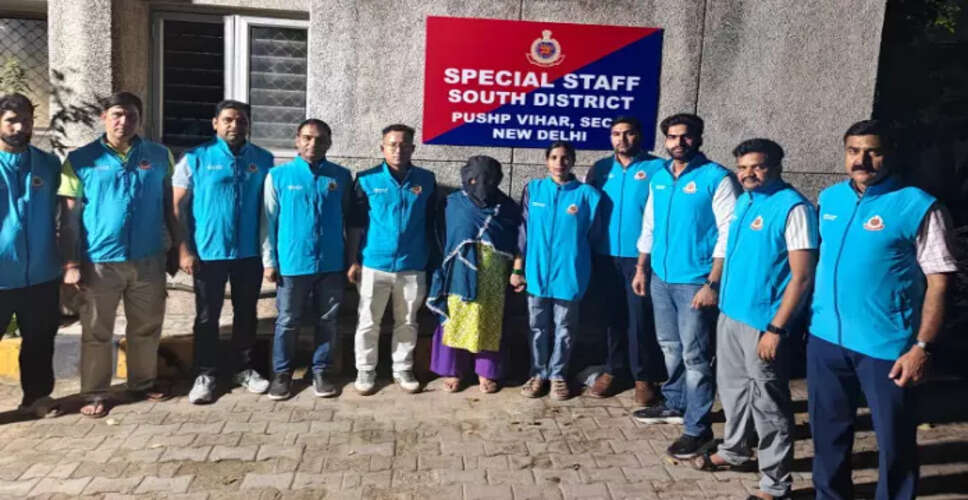
New Delhi, Aug 14: In a significant operation against international drug trafficking, the Special Staff of Delhi Police's South District dismantled an alleged Indo-Nepal drug syndicate on Friday, resulting in the seizure of 106.250 kg of high-quality charas valued at around ₹109 crore. Four individuals from Nepal have been arrested in connection with this case.
The police reported that this operation was the culmination of extensive intelligence gathering, technical surveillance, and field verification conducted over several weeks. The investigation began with the apprehension of three alleged street-level suppliers, which ultimately led to the discovery of a major storage and distribution hub in Delhi.
According to the authorities, the syndicate was engaged in the cross-border procurement, transportation, storage, and distribution of charas throughout the Delhi-NCR region.
The operation was executed by a dedicated team including SI Naveen Gurjar, SI Abhimanyu, SI Amit, ASI Padam, HC Rakesh, HC Virender, HC Manish, W/HC Sangeeta, Ct. Surender, and Ct. Khoichung B. Aminol, under the leadership of Inspector Anuj Kumar, who oversees the Special Staff, and under the supervision of ACP (Operations) Balram Singh Beniwal and ACP Hauz Khas Rituraj.
Police indicated that the breakthrough was achieved through two intelligence-led operations that were part of an ongoing investigation.
The first operation took place on June 29, following specific intelligence about the involvement of certain Nepalese nationals in supplying charas in the Delhi-NCR area. Acting on this information, the team tracked their movements and executed a raid at a residence in Kotla Mubarakpur.
During this raid, three suspects—Bharat Thapa (32), Govind Budha (32), and Jyoti Pun Magar (50)—were apprehended, with 8.598 kg of charas recovered from them.
Following this seizure, an FIR No. 129/2026 was filed under Sections 20, 25, and 29 of the Narcotic Drugs and Psychotropic Substances (NDPS) Act at the Kotla Mubarakpur Police Station.
Investigators then began to explore both the forward and backward linkages of the narcotics network. During the investigation, names such as Binmaya and Roshni emerged as alleged suppliers associated with the syndicate.
Through sustained interrogation of the arrested individuals, along with technical surveillance and financial analysis, the team identified Roshni Magar, who was reportedly managing a significant storage and distribution point in the Wazirabad area of Delhi.
After confirming her location, the Special Staff executed a meticulously planned raid on August 12, 2026. Officers recovered 97.652 kg of high-quality charas packed in 13 plastic bags, along with a mixing machine and packaging materials believed to be used for processing and distributing the narcotics.
This recovery brought the total amount seized in this case to 106.250 kg of charas, marking one of the largest drug recoveries by the South District police in recent history, with an estimated market value of around ₹109 crore.
Roshni Magar, 32, a Nepalese national, was arrested following this recovery. During questioning, she allegedly revealed her involvement in the distribution network operated by Bharat Thapa, Govind Budha, and Jyoti Pun Magar.
Authorities noted that after the arrest of the three suspects in June, she returned to Nepal, but believing the situation had calmed, she returned to India and resumed her activities before being caught.
Investigators indicated that the syndicate sourced charas through a Nepal-based supply network operating near the Indo-Nepal border at Sonauli. The contraband was then transported to Delhi via road and stored at various locations before distribution across the National Capital Region.
To evade detection, the accused relied on road transportation and are suspected of using social media to coordinate drug orders and maintain contact with buyers and distributors.
Payments were reportedly made through cash transactions and digital banking methods. The syndicate targeted areas with a high concentration of young consumers and utilized autorickshaws and bike taxis for deliveries. The accused also allegedly deleted digital communications after transactions to hide their activities.
Investigators identified Wazirabad and Majnu Ka Tila as areas being used as demand centers. Police suspect that narcotics were supplied to local distributors and customers frequenting pubs, bars, and hotels in these regions.
During the investigation, Binmaya, a Nepalese national, emerged as a key figure suspected of facilitating the transportation of charas from the Sonauli border to Delhi. Another individual, identified as Hari, has also been linked to the network as a supplier.
Authorities are working to clarify the roles of both individuals, track their locations, and uncover the financial connections associated with the syndicate.
Records indicate that none of the four arrested individuals have any known prior criminal records.
Further investigations are ongoing to identify additional members of the network, trace the Nepal-based suppliers, examine financial transactions, and uncover local distributors and associates linked to the syndicate.