
Delhi Police Arrests Four Youths for Online Radicalization and Recruitment
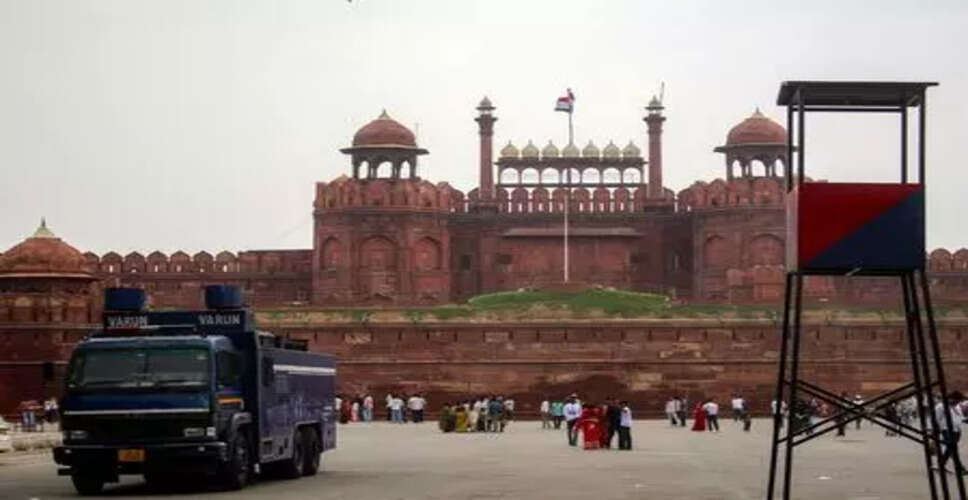

Arrests Made in Online Radicalization Case
Photo: IANS
New Delhi, April 18: On Saturday, the Special Cell of the Delhi Police announced the apprehension of four individuals from three different states, who were allegedly involved in online radicalization and recruitment efforts aimed at establishing an Islamic state through 'jihad'. Officials indicated a link to the Red Fort explosion that resulted in 11 fatalities and numerous injuries.
One suspect reportedly visited sensitive sites, including the Red Fort in December 2025, where he shared a photo of the landmark adorned with a black flag to incite others, according to police reports.
The police statement emphasized that these individuals had been radicalized to engage in terrorism-related activities. Authorities also confiscated materials used for crafting Improvised Explosive Devices (IEDs) from one of the suspects, along with their mobile phones.
A team from the Delhi Police Special Cell, led by Inspectors Vinay Pal and Manoj Kumar, along with ACP Ashish Kumar, executed the arrests in Maharashtra, Odisha, and Bihar. An FIR has been filed under relevant sections of the law.
Among those detained, Mosaib Ahmad, Jalaluddin Siddiqui, and Mohammad Hammad were from Maharashtra, while Sheikh Imran was from Odisha and Mohammad Sohail hailed from Bihar.
Authorities confirmed that the suspects were part of various closed groups on encrypted social media platforms, where they were allegedly involved in radicalizing and recruiting individuals for the establishment of an Islamic state through 'jihad'.
The investigation uncovered that two members of the group were in the process of gathering locally-sourced materials to create a remote-controlled IED intended for a terrorist attack at a strategic moment.
Officials detailed their methods, noting that one group member was encouraging others to gather weapons and explosives for participation in 'Ghazwa-e-Hind'. He even shared his bank account information on social media for crowdfunding support for 'jihad'.
Another suspect offered to arrange arms training for group members and requested financial contributions for this purpose.
Mosaib Ahmad was reportedly involved in several online radical groups. Police stated that he assisted co-accused Mohammad Hammad by modifying a remote-controlled toy car for IED assembly and shared images within a closed group.
Hammad, in turn, circulated images of materials such as ball bearings, nails, and remote-controlled toy cars for IED construction within a closed group, passing them to Mosaib Ahmad, who, as a mechanic, was responsible for assembling the IED.
Sheikh Imran, originally from Bhubaneswar, worked as a security guard and delivery person. In 2024, he began listening to lectures from figures like Tareeq Jameel and Zakir Naik, which led him to adopt radical views. He connected with his associates via social media and discussed potential targets, including the Ram Mandir and military sites, and was involved in scouting the Red Fort.
Mohammad Sohail, a plumber, was similarly influenced by Israr Ahmed. He created multiple social media profiles to rally youth under the banner of 'jihad'. In March 2026, he urged his followers to gather weapons and explosives for 'Ghazwa-e-Hind' and shared his bank details for fundraising.