
Delhi-NCR Faces Winter Chill Amid Poor Air Quality

Winter Arrives in Delhi-NCR with Deteriorating Air Quality
Representational Image
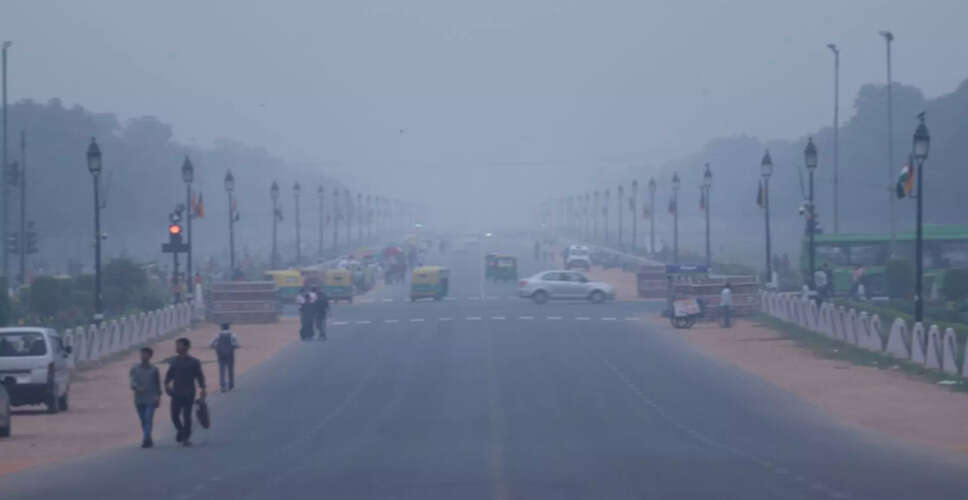
New Delhi, Nov 2: Residents of Delhi-NCR woke up to a chilly morning on Monday, signaling the gradual onset of winter in the area. Unfortunately, the air quality has plummeted to the 'very poor' category, with the overall Air Quality Index (AQI) hitting 310 after a brief improvement due to last week's rainfall.
Monitoring stations throughout the national capital and its neighboring regions reported air quality ranging from 'poor' to 'very poor'. Specific AQI readings included 313 in Burari, 258 in Badarpur, 213 in Chhawla, 237 in Jharoda Kalan, 273 in Vasundhara Enclave, 256 in Karala, and 310 in Uttam Nagar.
Other locations also showed alarming pollution levels, such as Ghoga at 274, Nangloi at 319, NIH Narela at 353, Mandir Marg at 340, Aya Nagar at 288, CRRI Mathura Road at 334, and Pusa at 340. Sirifort recorded an AQI of 354, while Chandni Chowk reached 361 and Burari Crossing was at 354.
In addition, JNU reported an AQI of 319, Alipur at 382, North Campus of Delhi University at 359, Talkatora Garden at 322, and Dwarka Sector-8 at 357.
As northern India transitions into winter, contrasting weather patterns are emerging across the country. While the northern states enjoy cooler temperatures, southern and eastern regions brace for heavy rainfall as Cyclone Murasu approaches the Andhra Pradesh coastline.
The India Meteorological Department (IMD) forecasts a bright day for Delhi, with temperatures expected to range from 17 to 29 degrees Celsius. No rainfall warnings have been issued for the national capital. Punjab and Haryana are also anticipated to remain mostly dry, offering some relief from erratic weather.
Meanwhile, the Bay of Bengal is experiencing heightened weather activity, with Cyclone Murasu predicted to strengthen before making landfall near Andhra Pradesh. Winter conditions are tightening their hold on Himalayan regions, including Spiti, Ladakh, and Kedarnath.
To combat rising pollution levels during winter, the Delhi government has initiated fixed-term restrictions as part of its Winter Action Plan, effective from November 1 and lasting until February 28.
A complete ban on construction and demolition activities, with certain exceptions, will be enforced from December 10 to January 20. This plan aims to reduce vehicular emissions, manage dust, and alleviate road traffic during the peak winter months.
Additionally, the government has adjusted office hours to mitigate traffic congestion. Delhi government offices will operate from 10 a.m. to 6:30 p.m., while the Municipal Corporation of Delhi will function from 8:30 a.m. to 5 p.m. until February 28. Parking fees at authorized municipal sites will also be doubled to discourage the use of private vehicles.
On the inaugural day of the Winter Action Plan, authorities imposed fines and environmental compensation totaling Rs 68.4 lakh. Enforcement teams inspected nearly 15,000 vehicles, turning back 1,539 at border points and issuing 566 challans for violations related to Pollution Under Control Certificate regulations.
As per official data available until 5 p.m. on Sunday, penalties included Rs 56.6 lakh for PUCC violations, Rs 2 lakh for breaches of vehicle entry restrictions, and Rs 9.8 lakh as environmental compensation for dust-control violations at construction and demolition sites.