
Delhi-NCR Air Pollution: Key Factors and Government Response
Understanding Air Pollution in Delhi-NCR
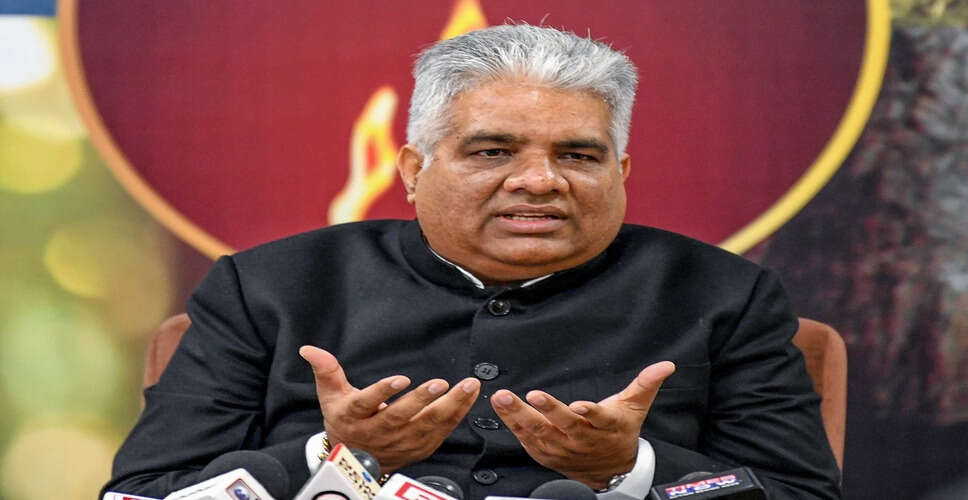
Union Environment Minister Bhupender Yadav highlighted that air pollution in the Delhi-NCR region primarily stems from two critical parameters: PM2.5 and PM10. He noted that dust from vehicles, industries, and construction activities, along with adverse weather conditions, plays a significant role in this issue. In a recent interview, Yadav explained that industrial activities, emissions from vehicles, and other human actions contribute to the presence of ozone, lead, carbon, and sulfur particles in the air, which in turn increases PM2.5 pollution due to rising carbon emissions.
The Impact of Weather on Air Quality
Yadav further elaborated that PM10 consists of larger dust particles. When these particles combine and weather conditions worsen, the situation escalates. He pointed out that when the wind dies down and smoke continues to rise, pollution becomes trapped in the air. The minister emphasized the importance of traffic management, stating that congestion significantly elevates pollution levels. He mentioned that efforts have been made to implement smart traffic management systems, particularly in around 60 locations known for severe traffic jams. During peak hours, from 8 to 10 AM and 4 to 7 PM, when fog and haze are prevalent, thousands of vehicles are often stuck in long lines, exacerbating pollution from vehicles.
Challenges in December and Government Measures
Yadav acknowledged that while air quality has improved in recent days, adverse weather conditions during December continue to pose challenges. He noted that western disturbances sometimes bring rainfall, which can enhance air quality. However, when these systems pass without precipitation, wind speeds decrease, allowing PM2.5 and PM10 particles to remain suspended in the air, leading to a decline in air quality.
Government's Action Plan Against Air Pollution
In response to deteriorating air quality, the Commission for Air Quality Management (CAQM) has implemented all measures under the Phase-IV Graded Response Action Plan (GRAP) in Delhi-NCR. The restrictions under GRAP-IV include a ban on non-essential construction activities, restrictions on the entry of certain diesel vehicles, and stringent enforcement to control pollution sources. The government has also intensified its campaign against vehicle emissions, issuing over 100,000 Pollution Under Control Certificates (PUCC) in the last four days as part of a citywide enforcement drive. Multi-agency inspections conducted by the Delhi Traffic Police, Transport Department (Enforcement), and ANPR-based teams have resulted in numerous fines for vehicles lacking valid PUCCs and for violations of GRAP.