
Delhi High Court Takes Action Against AAP Leaders for Contempt: What You Need to Know
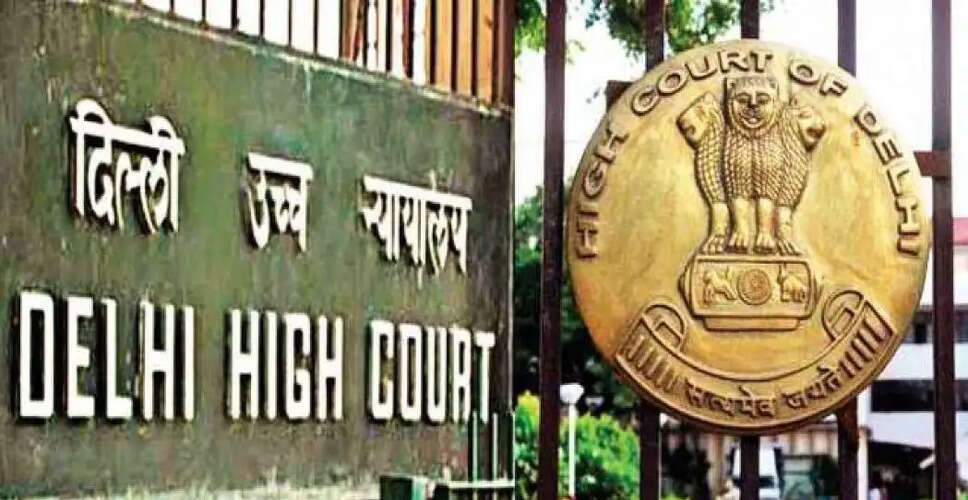

Contempt Proceedings Initiated by Delhi High Court
New Delhi: On Thursday, the Delhi High Court commenced criminal contempt proceedings against former Chief Minister Arvind Kejriwal and several leaders from the Aam Aadmi Party (AAP). The court found that a "coordinated campaign" had been executed to undermine the judiciary in relation to the excise policy case.
Justice Swarana Kanta Sharma issued a comprehensive order stating that the social media activities, videos, and public remarks made against her after she declined to recuse herself from the case crossed the boundary between legitimate criticism and criminal contempt. She noted, "The contemnors did not merely express disagreement but engaged in a campaign of vilification against not just this judge but the judiciary as a whole."
Contempt notices were served to Kejriwal, former Deputy Chief Minister Manish Sisodia, MP Sanjay Singh, and AAP members Saurabh Bharadwaj, Vinay Mishra, and Durgesh Pathak.
Justice Sharma emphasized that while judges are accustomed to accepting fair criticism, silence does not equate to judicial restraint when there is a deliberate attempt to tarnish the judiciary's reputation.
"This court does not seek sympathy or immunity from criticism. However, if there are efforts to damage the judicial institution through coordinated campaigns, the court has both the authority and responsibility to respond," she stated.
The court clarified that while it is acceptable to criticize judicial decisions, there is a "very thin line" separating fair criticism from contempt.
"Any citizen can criticize a judge or a ruling, and that does not amount to contempt. However, there is a difference between fair criticism and orchestrating a campaign to depict a judge as biased," the court remarked.
Justice Sharma pointed out that instead of appealing the recusal decision to the Supreme Court, Kejriwal opted to take the matter to social media, disseminating letters and videos that questioned her impartiality.
"He could have approached the Supreme Court. Instead, he chose to publicly circulate letters and videos alleging political bias and implying that justice could not be expected from this court," the judge noted. The High Court deemed this behavior as an attempt to foster public distrust in the judiciary, warning that it could lead to chaos if not addressed.
Justice Sharma also mentioned that even her family members were drawn into the controversy as part of a "psychological coercion" strategy aimed at pressuring her to step down from the case. "I refuse to be intimidated," she asserted, adding that remaining silent would be tantamount to "surrender." She clarified that the contempt proceedings were not driven by personal feelings but were intended to safeguard the judicial institution. "Judges may come and go, but the institution of justice will endure. The judiciary in India will remain fearless," Justice Sharma affirmed.
Following the initiation of contempt proceedings, Justice Sharma recused herself from further hearings on the excise policy case, stating, "If I continue to hear this case, Kejriwal and others might think I hold a grudge against him. Therefore, I believe this case should be assigned to another Bench."
Earlier that day, the Delhi High Court announced it would begin contempt proceedings after "extremely vilifying and defamatory" materials were reportedly circulated against the judge overseeing the CBI's revision petition in the excise policy matter. Justice Sharma had previously contemplated appointing senior advocates as amici curiae after Kejriwal, Sisodia, and Pathak opted to abstain from proceedings following the rejection of their recusal requests.
The trial court had previously issued a judgment exceeding 1,100 paragraphs, discharging all accused, including Kejriwal and Sisodia, on the grounds that the evidence indicated the now-repealed excise policy was the result of a consultative process, and the prosecution failed to demonstrate an overarching conspiracy.
In its revision petition to the Delhi High Court, the CBI alleged that the excise policy established by the then AAP-led Delhi government was manipulated to benefit select liquor traders in exchange for kickbacks. On March 9, Justice Sharma issued a notice regarding the CBI's plea challenging the discharge order and also stayed negative remarks made by the trial court against the investigating agency and a CBI officer.