
Delhi High Court Supports Temporary Telegram Ban Ahead of NEET-UG 2026

Court Upholds Government's Decision
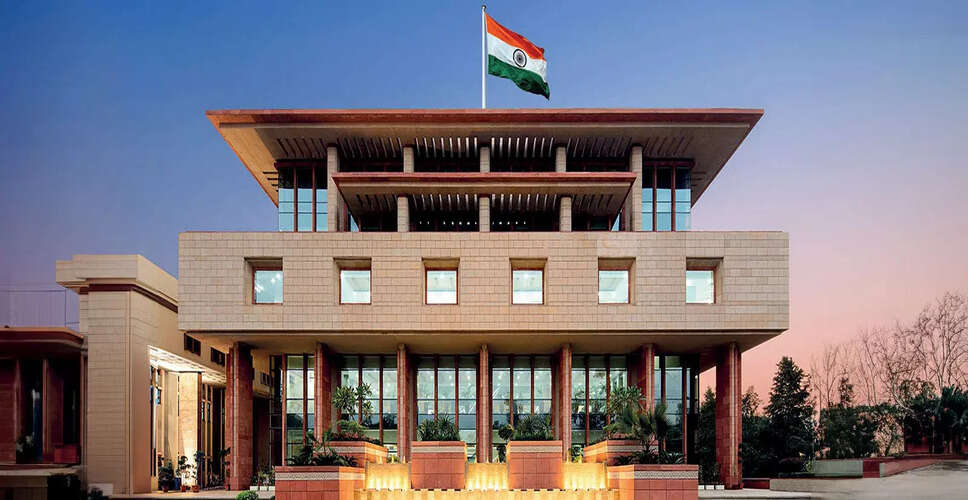
File image of Delhi High Court (Photo: official website)
New Delhi, June 19: On Friday, the Delhi High Court confirmed the government's temporary ban on the messaging service Telegram in light of the upcoming NEET-UG 2026 re-examination, dismissing the company's appeal against the restriction that lasts until June 22.
The Court also endorsed the Centre's directive mandating Telegram to deactivate its message-editing feature in India until June 30, a precautionary step aimed at curbing misinformation related to the examination.
As reported by a legal news outlet, Justice Tejas Karia stated that the government adhered to the necessary procedures outlined in Section 69A of the Information Technology Act, justifying the use of emergency powers given the circumstances.
The Court expressed approval of the government's approach and rejected Telegram's argument that the blocking order was invalid due to a lack of provided reasons.
According to the legal news source, the Court affirmed that the Centre had the authority under Section 69A of the IT Act to restrict access to an entire platform, deeming the temporary ban a proportional response and a necessary measure under the current situation.
The Court elaborated that Telegram's features could enable the swift dissemination of false information.
It highlighted that public channels with extensive memberships, automated bots for mass distribution, the ability to hide phone numbers, and the lack of a time limit for editing messages rendered the platform susceptible to misuse.
Furthermore, the Court noted that even if a channel was deleted, it could be recreated quickly, allowing illegal activities to resume almost immediately.
Regarding the message-editing function, the Court pointed out that users could modify previously shared content and attachments, which could mislead others into believing that examination papers had been leaked prior to the test.
The Court indicated that such edits could misinform the public and potentially disrupt public order concerning the NEET-UG 2026 re-examination set for June 21.
The temporary ban was enacted following recommendations from the National Testing Agency (NTA) and the Department of Higher Education under the Ministry of Education.
During the hearings, Telegram contended that it had already eliminated over 900 links containing unlawful NEET-related content and had employed AI and machine learning tools to identify and remove such material.
However, the Centre argued that the platform's structure allowed bots and duplicate channels to continue spreading information despite these removal efforts.
Telegram's founder, Pavel Durov, criticized the decision, claiming it penalized regular users instead of those responsible for leaking examination materials.
Earlier this week, the Centre defended the temporary ban, stating it had "no other option" after organized cheating networks reportedly utilized Telegram channels, groups, and bots to distribute fake question papers and misinformation ahead of the June 21 NEET-UG re-test.
With inputs from a legal news outlet