
Delhi High Court Issues Notice to Arvind Kejriwal Over Contempt Case

Court Takes a Firm Stand Against Contempt
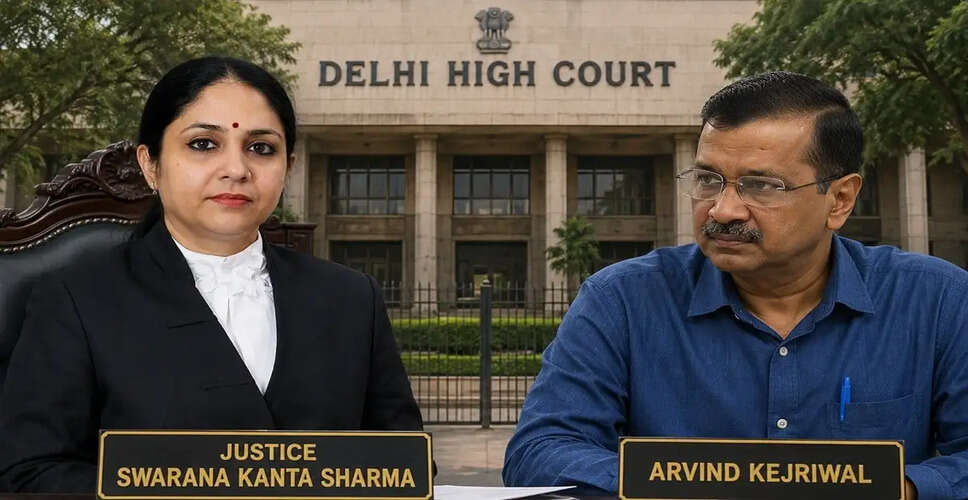
Justice Swarnakanta Sharma of the Delhi High Court has adopted a stringent approach in a contempt of court case, issuing a notice to Arvind Kejriwal. The court has issued a clear warning that failure to take strict action in such matters could lead to chaos in society. Alongside Kejriwal, other senior leaders of the Aam Aadmi Party, including Manish Sisodia, Sanjay Singh, and Durgesh Pathak, will also face contempt proceedings.
In a significant remark regarding the dignity of the judiciary, the court emphasized that when attempts are made to undermine such a supreme institution, it becomes the paramount duty of a judge to operate without any pressure and not allow their decisions to be swayed by such attempts at defamation. The court clarified that while considering a plea for the judge's recusal from the case, it felt that the issue was limited to the validity of a judicial order and concerns of bias.
Appointment of Amicus Curiae
Previously, the court indicated that it would appoint three senior advocates as amicus curiae to represent AAP leaders Arvind Kejriwal, Manish Sisodia, and Durgesh Pathak. These advocates will participate in the CBI's petition against the acquittal order in the excise policy case. This decision came after Kejriwal, Sisodia, and Pathak wrote to Justice Sharma stating that they would not have any lawyer representing them in the excise matter. Kejriwal expressed in his letter that he no longer held hope for justice from Justice Swarnakanta, leading him to decide to follow the path of satyagraha as shown by Mahatma Gandhi. Following Kejriwal, Sisodia and Pathak also informed Justice Sharma that they would appear in court without legal representation. Justice Sharma had previously refused to recuse herself from hearing the CBI's petition.
Rejection of Recusal Plea
Justice Sharma dismissed the plea for her recusal, stating that accepting such requests would set a troubling precedent. She added that every unsubstantiated and baseless allegation of bias or discrimination tarnishes not just an individual judge but also the collective integrity of the judiciary. The judge affirmed that the court would stand firm for itself and the judiciary whenever necessary, even if it seems challenging.