
Delhi High Court Issues Notice on Sharjeel Imam's Bail Plea Related to 2020 Riots
The Delhi High Court has taken action on the bail application of student activist Sharjeel Imam, associated with the February 2020 riots. A notice has been issued to the Delhi Police, with the next hearing scheduled for August 27. Imam's legal team has challenged a previous trial court ruling that denied bail, arguing that there has been no progress in the trial and that the circumstances have not changed since the Supreme Court's earlier dismissal of his plea. This case raises significant legal questions regarding the application of bail laws under the Unlawful Activities (Prevention) Act.
| Jul 17, 2026, 13:08 IST
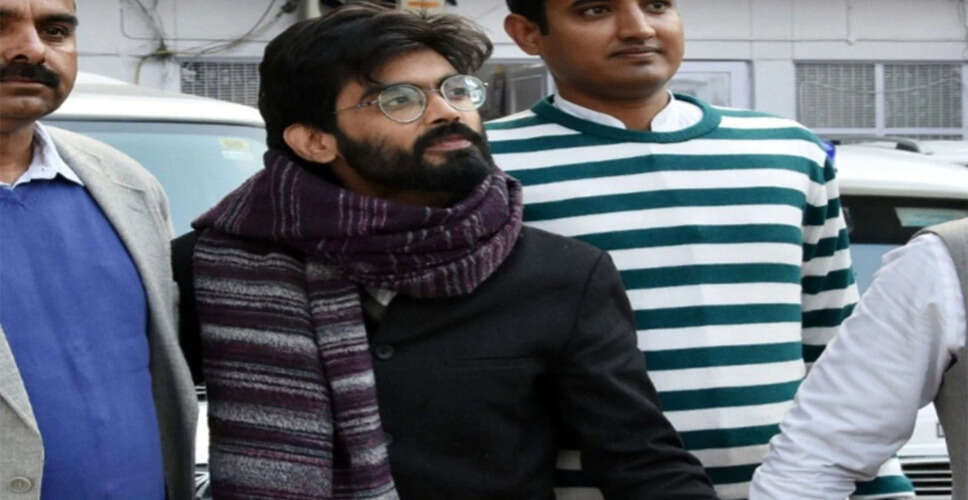

Court Proceedings on Sharjeel Imam's Bail Application
The Delhi High Court has issued a notice regarding the bail application of student activist Sharjeel Imam, linked to a significant conspiracy case stemming from the February 2020 riots. A bench comprising Justices Pratibha M. Singh and Vikas Mahajan has requested a response from the Delhi Police, scheduling the next hearing for August 27. The court's order explicitly stated to issue a notice and list the matter for the specified date.
Sharjeel, through his lawyers Ibrahim and Talib Mustafa, filed a petition in the High Court challenging the trial court's decision from July 4.
The trial court had rejected the bail applications of Sharjeel and Umar Khalid on July 4, stating there was no basis to consider a new application, as it could not ascertain whether circumstances had changed since the Supreme Court dismissed their pleas in January.
Additional Sessions Judge (ASJ) Sameer Bajpai from the Karkardooma Court noted that the matter concerning Gulafsha Fatima's case had already been referred to a larger bench of the Supreme Court due to differing opinions following the January 5 ruling regarding Syed Iftikhar Andrabi's case. The trial court indicated that it could not entertain any new applications until this issue was resolved, as the Supreme Court had expressed serious doubts about the arguments presented in the January 5 decision.
The court remarked that it is possible that the principles established in the Union of India vs. K.A. Najeeb (2021) ruling were not properly applied in this case. This ruling acknowledged that prolonged incarceration and delays in trial could allow for the circumvention of legal restrictions on bail under Section 43D(5) of the Unlawful Activities (Prevention) Act (UAPA). Following the arguments presented by Sharjeel's lawyer, the court issued the notice, stating that the trial court's belief that there was no basis for considering a new bail application was incorrect. The lawyer argued that this conclusion was flawed since there had been no progress in the trial, and charges had yet to be framed. He pointed out that the procedural stage was similar to that in January when the Supreme Court had denied Sharjeel's bail plea.