
Delhi High Court Halts Release of Controversial Film 'Udaipur Files'
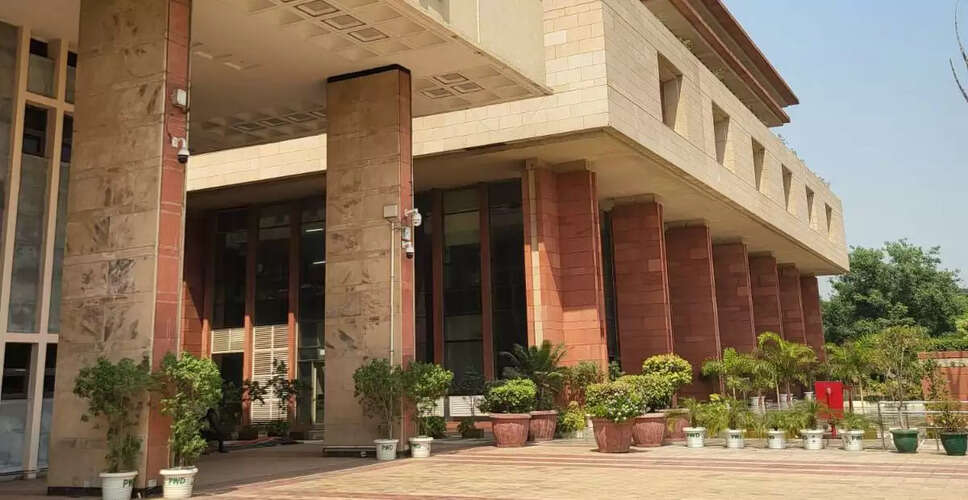
Court Issues Stay on Film Release
On Thursday, the Delhi High Court placed a stay on the release of the Hindi film Udaipur Files, which is said to be inspired by the 2022 murder of tailor Kanhaiya Lal. This decision will remain in effect until the Union government evaluates the film's content.
This ruling followed a Supreme Court decision that declined to urgently address a petition aimed at preventing the film's release. Udaipur Files was set to premiere in theaters on Friday.
A bench led by Chief Justice DK Upadhyaya and Justice Anish Dayal instructed the Union government to utilize its revisional authority under Section 6 of the Cinematograph Act to review the film.
This section grants the government the power to revise or suspend film certifications.
The court was considering a series of petitions, including one from Jamiat Ulama-e-Hind leader Maulana Arshad Madani, who sought a ban on the film. The petitioners argue that the film incites communal tensions and disparages the Muslim community.
The court allowed the petitioners to approach the Union government within two days and mentioned that they could also request interim measures. The government was instructed to review the application and make a decision within a week.
Background of the Case
In June 2022, Kanhaiya Lal, a tailor, was murdered in Udaipur, Rajasthan, allegedly for sharing a social media post supporting suspended BJP spokesperson Nupur Sharma, who had made controversial remarks about Prophet Muhammad during a television debate.
The Rajasthan Police arrested the assailants and others involved in the case. A video surfaced showing two men claiming responsibility for Lal's murder while displaying the weapons used.
The National Investigation Agency is currently investigating the murder case, with the accused facing charges under the Unlawful Activities Prevention Act. The trial is ongoing in a Special NIA Court in Jaipur.
Arguments Presented in Court
During the proceedings, advocate Kapil Sibal, representing the petitioners, urged the court to assess whether the film could be screened given the current societal climate.
Additional Solicitor General Chetan Sharma, representing the Central Board of Film Certification, informed the bench that 55 cuts had been mandated in the film, indicating that the certification body had exercised due diligence. He contended that the film was focused on crime rather than being community-specific.
Advocate Shreeyash U Lalit, representing the filmmakers, referenced the chargesheet from the National Investigation Agency. However, the bench remarked that the film could not be justified based on investigative materials.
Lalit described the film as a typical India-Pakistan narrative, while Sibal accused it of containing hate speech and depicting the Muslim community negatively, labeling it as 'cinematic vandalism.'
Supreme Court Clarification
In a related development, the Supreme Court clarified that it had not issued a formal order when it declined to hear the petition to halt the film's release. Justices Sudhanshu Dhulia and Joymala Bagchi explained that their earlier comments were merely observations.
On Wednesday, the court had heard a writ petition from Mohammed Javed, one of the accused in the murder case, who argued that the film's release would infringe upon his right to a fair trial. He requested a postponement of the film's release until the trial concluded, citing concerns that the film appeared to be communally provocative based on its trailer.
The justices indicated that the petition could be presented to the appropriate bench when the Supreme Court reconvened on July 14 after its summer recess, allowing the film's release in the interim.