
Delhi Government Offers Compensation to Construction Workers Amid Pollution Control Measures
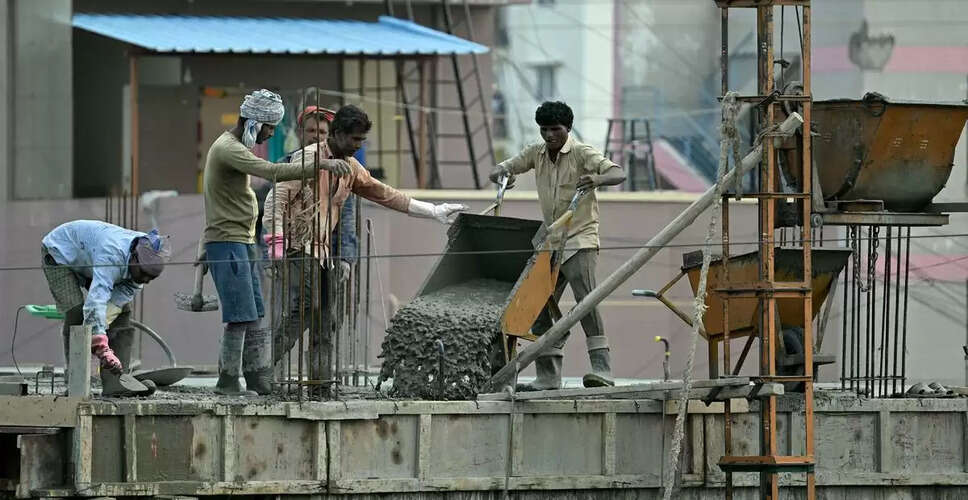
Compensation Announcement for Affected Workers
On Wednesday, Delhi's Labour Minister, Kapil Mishra, declared a compensation of ₹10,000 for construction workers who have lost their jobs due to the pollution control restrictions implemented in the capital.
As of Wednesday, Stage IV of the Graded Response Action Plan (GRAP) is active in Delhi. This plan consists of a series of escalating anti-pollution measures that are activated to mitigate air quality deterioration once it reaches a specific level in the Delhi-NCR area.
Starting from Stage III, GRAP prohibits non-essential construction activities and mandates the shutdown of stone crushers and mining operations. Stage IV introduces further limitations, including a complete suspension of construction work for both public and private projects.
Mishra noted that Stage III had been enforced for 16 days, and workers impacted by these restrictions during this timeframe would receive ₹10,000 as compensation.
“Compensation will also be provided for the duration that Stage IV remains in effect,” he stated, emphasizing that this aid would only be available to workers registered with the government.
Press Conference at Delhi Secretariat.
— Kapil Mishra (@KapilMishra_IND) December 17, 2025
Delhi Labour department advisory issued.
Compensation for registered and verified Labourers.
50 percent work force to be operating at work place, with exceptions to essential services.https://t.co/qzQfJ5iVOG
He further mentioned that the registration process for workers is currently ongoing.
However, the compensation initiative will not cover those employed in hospitals, pollution control departments, fire services, and other essential sectors.
Mishra also instructed that all government and private entities in Delhi must ensure that 50% of their workforce operates from home starting Thursday, or they will face penalties.
Current Air Quality Status in Delhi
Delhi AQI
On Wednesday, Delhi's air quality remained categorized as “very poor,” with an average Air Quality Index (AQI) of 328 recorded at 1:05 PM, according to the Sameer application.
Out of the 40 monitoring stations in the city, 30 reported “very poor” air quality, as indicated by the application that provides hourly updates from the Central Pollution Control Board. Data from one monitoring station was unavailable at that time.
The average AQI on Tuesday was 354, also classified as “very poor,” showing a slight improvement from Monday, when the air quality had dropped to the “severe plus” category with an average AQI of 427.
Over the past week, Delhi's air quality has significantly declined, with the average AQI increasing from 307 on Thursday to 349 on Friday, reaching 431 on Saturday, and peaking at 461 on Sunday.
An AQI value between 301 and 400 indicates “very poor” air quality, while values between 401 and 450 signify “severe” pollution, and anything above 450 is classified as “severe plus.”
Air quality in the “severe” and “severe plus” categories poses serious health risks, even to individuals in good health.
The recent decline in air quality has been attributed to unfavorable weather conditions, including low wind speeds caused by a western disturbance.
Since mid-October, the Delhi-NCR region has consistently recorded air quality in the “poor” or worse categories.
Air quality tends to deteriorate sharply during winter months in Delhi, which is frequently ranked as the world's most polluted capital. Factors contributing to this issue include stubble burning in Punjab and Haryana, vehicular emissions, firecracker use during Diwali, lower temperatures, reduced wind speeds, and emissions from industries and coal-fired power plants.