
Delhi Government Implements Strict Measures to Combat Air Pollution
New Air Quality Measures Announced
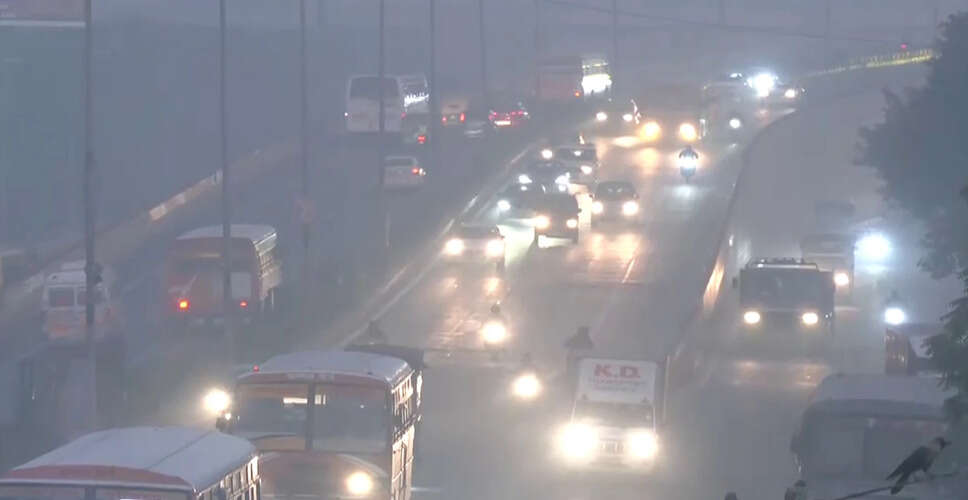
As air pollution levels surged, pushing Delhi's Air Quality Index into the severe category this week, the Delhi government has announced a series of stringent measures. These include the initiation of hybrid work arrangements, restrictions on vehicles transporting construction materials, and the requirement for vehicles entering the National Capital to possess a Pollution Under Control (PUC) certificate. These new regulations took effect on Thursday and are in addition to the GRAP 4 restrictions imposed by the Air Quality Management Commission, following three consecutive days of poor air quality in the city starting Saturday, December 13.
Delhi's Labor Minister, Kapil Mishra, stated that all government and private institutions must implement work-from-home policies starting Thursday, with penalties for non-compliance. However, exemptions will be made for essential services and frontline workers.
‘No PUC, No Fuel’ Policy Enforced
To address the worsening air quality, authorities have enforced a ban on the entry of non-BS-6 registered private vehicles from outside Delhi, effective Thursday. Additionally, vehicles lacking a valid PUC certificate will not be able to refuel at petrol stations. This policy is being enforced through automated number plate recognition cameras, voice alerts at pumps, and police assistance, meaning vehicles without a PUC will be denied fuel—hence the slogan ‘No PUC, No Fuel.’
According to officials, 580 police personnel have been deployed at 126 checkpoints, including those at Delhi's borders. Furthermore, several enforcement teams from the transport department have been stationed at petrol stations and border checkpoints to ensure effective implementation.
However, the entry ban on non-BS-6 vehicles does not apply to CNG or electric vehicles, public transport, or vehicles carrying essential goods and services. Vehicles transporting construction materials are also prohibited from entering the city under the GRAP phase four restrictions.
Guidelines for Work from Home
This directive applies to both government and private institutions, although offices may continue to operate partially in physical mode. All private offices in the National Capital Region must ensure that more than half of their employees do not report to the physical workplace, while the remaining staff must work from home.
The work-from-home mandate does not apply to emergency and frontline workers, including those in hospitals, air pollution control departments, fire services, and other essential services. Public and private health services, transport services, and sanitation services are also exempt.
Construction workers affected by the halt in construction activities will receive compensation of ₹10,000. Kapil Mishra indicated that this compensation will be provided for the duration of the GRAP 4 implementation, and the registration process for workers is currently underway.