
Delhi Faces Severe Air Pollution as AQI Hits 200
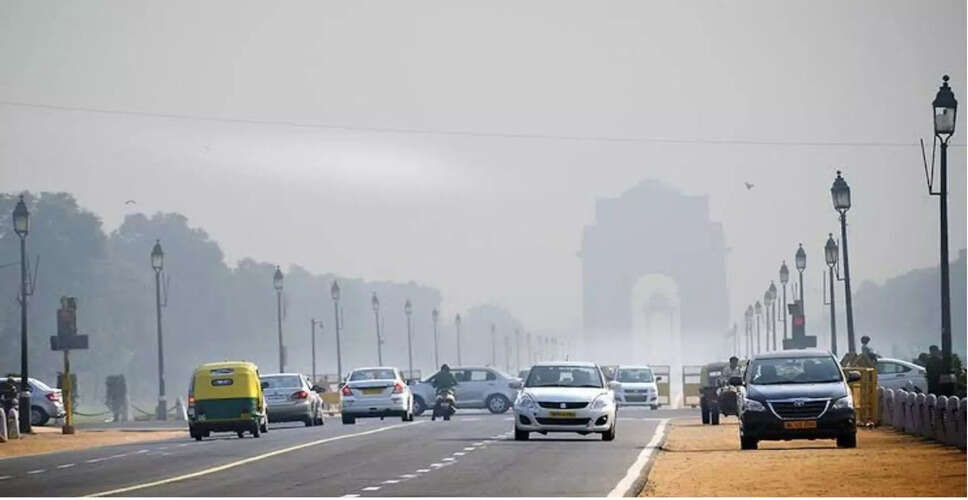

Delhi's Air Quality Deteriorates
Representational Image(Photo: @Indianinfoguide/X)
New Delhi, Nov 24: On Tuesday morning, residents of Delhi were greeted by another day of poor air quality, with the average Air Quality Index (AQI) recorded at 200 at 8 a.m., as per real-time data from the Central Pollution Control Board (CPCB). The primary pollutant identified was PM2.5.
Monitoring stations throughout the national capital reported alarming air quality levels. Sirifort recorded an AQI of 333, while IGNOU-Maidan Garhi followed closely at 330. Other areas such as Talkatora Garden, North Campus, and CRRI Mathura Road reported AQIs of 319, 322, and 311, respectively. Additional locations like Burari Crossing, Commonwealth Sports Complex, and IIT-Delhi also showed high pollution levels, with readings above 300.
Other stations noted elevated pollution, including Aya Nagar (280), Mundka (282), JNU (284), and DTU (258). Areas like Bawana, Shadipur, and Nehru Nagar reported AQIs ranging from 250 to 256.
Biomass burning has been a focal point in discussions regarding PM2.5 levels in Delhi. However, recent data from the Indian Institute of Tropical Meteorology's (IITM) Air Quality Early Warning System reveals a more complex situation.
As per the source-apportionment data for November 23, stubble burning contributed a mere 0.8 percent to the daily mean PM2.5 levels in Delhi. The largest share came from the 'Others' category at 32 percent, with transport emissions within the city accounting for 21.5 percent.
Additionally, pollution from neighboring districts, such as Jhajjar (10.2 percent) and Rohtak (6.1 percent), significantly impacted Delhi's air quality.
In response, the Commission for Air Quality Management (CAQM) has maintained Stage II of the Graded Response Action Plan (GRAP) across Delhi-NCR. This stage includes enhanced mechanized road cleaning, dust suppression, water sprinkling, and stricter enforcement of dust-control regulations at construction sites, along with measures to limit private vehicle usage.
In a related development, CAQM Member Secretary Tarun Kumar Pithode convened a review meeting with Deputy Commissioners (DCs) and District Magistrates (DMs) from Delhi-NCR and surrounding areas to evaluate the effectiveness of current winter pollution-control strategies and the District Action Plans for 2027.
To ensure accountability, specific officers have been designated to oversee the achievement of emission-reduction targets.
In a post on X, the CAQM highlighted the importance of executing the District Action Plans for 2027 to combat pollution effectively.
Previously, on Saturday, the CAQM began evaluating and ranking Delhi and neighboring states based on their implementation of air pollution control measures. The 2026 report card, which covers progress until October, pointed out significant deficiencies in industrial inspections, waste management, public transport, and pollution-monitoring systems.