
Delhi Experiences Relief from Heat with Afternoon Rainfall
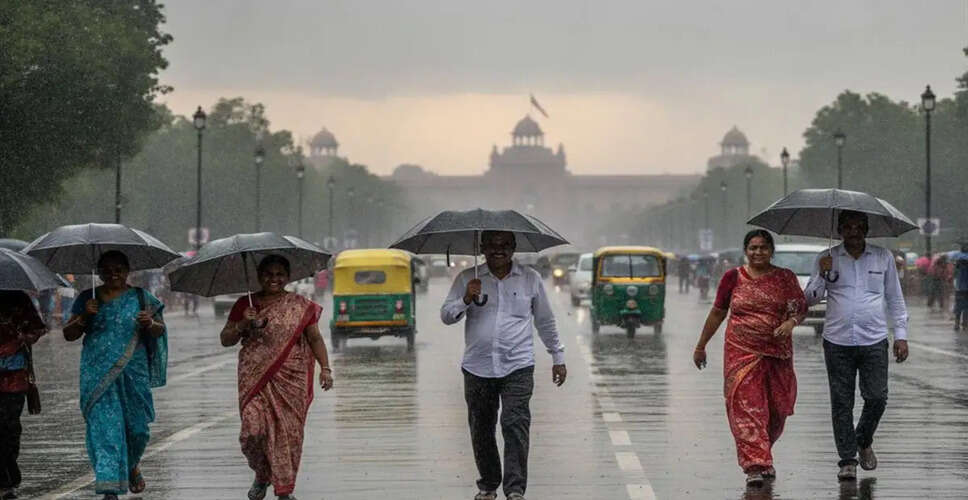

Rainfall Brings Relief to Delhi Residents
New Delhi, July 27 - The afternoon rain on Monday provided a welcome respite from the heat and humidity in the national capital. Earlier in the day, temperatures had soared several degrees above the normal range. According to the India Meteorological Department (IMD), the highest rainfall recorded by 5:30 PM was 19.4 mm in the Ridge area.
Additionally, Lodhi Road saw 11.5 mm of rain, while the main weather station at Safdarjung recorded 8.0 mm. Light rain was also reported in various other parts of the city, with Ayanagar receiving 3.8 mm, Pusa 4 mm, and Janakpuri 2 mm. Areas like Mayur Vihar, Naraina, and Najafgarh experienced light drizzles of about 0.5 mm.
However, regions such as Palam, Jafarpur, and Chhatarpur did not receive any rainfall between 2:30 PM and 5:30 PM. The maximum temperature at Safdarjung reached 38.1 degrees Celsius, which is 3.2 degrees above normal. Palam and Lodhi Road recorded maximum temperatures of 37.2 degrees Celsius, while Ridge and Ayanagar noted 36.4 degrees Celsius.
Earlier on Monday morning, the minimum temperature in Delhi was 28.6 degrees Celsius, slightly above the normal by 1.3 degrees. Minimum temperatures were recorded at 26.8 degrees in Palam, 27.8 degrees in Lodhi Road, 24.8 degrees in Ridge, and 27.5 degrees in Ayanagar. The National Disaster Management Authority (NDMA) has forecasted light rain, thunderstorms, lightning, and winds reaching speeds of 30 to 40 kilometers per hour in some parts of Delhi on Monday night.
The IMD has issued a yellow alert for Tuesday, indicating that the day will likely be overcast with chances of light to moderate rainfall. According to the Central Pollution Control Board (CPCB), Delhi's average Air Quality Index (AQI) over the past 24 hours has remained at 101 for the second consecutive day, which falls into the moderate category.
The CPCB categorizes AQI levels as follows: 0-50 is considered good, 51-100 satisfactory, 101-200 moderate, 201-300 poor, 301-400 very poor, and 401-500 severe.