
Delhi Experiences Record Rainfall in Early August 2023
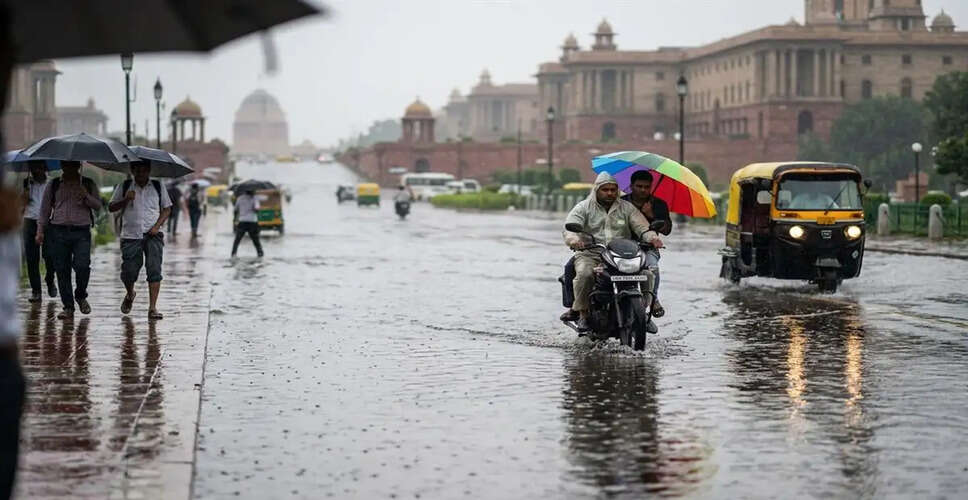

Unprecedented Rainfall in Delhi
New Delhi, August 7 - The capital witnessed its highest rainfall for the first week of August since 2011, with a total of 127 millimeters recorded over the initial seven days of the month. Continuous rain persisted throughout Friday in the national capital.
Several weather stations reported over 100 millimeters of rain during the day. According to the India Meteorological Department (IMD), this marked the most significant rainfall in the first week of August in 15 years. The presence of multiple weather systems contributed to the above-average precipitation, resulting in a notable drop in temperatures.
The IMD has issued a red alert for Delhi. Between 5:30 PM and 6:30 PM, Mayur Vihar recorded 24 millimeters of rain, followed by 19 millimeters in Pushp Vihar, 12.5 millimeters in Pragati Maidan, and 10.5 millimeters in Chhatarpur. Areas with relatively lower rainfall included Pusa with 5 millimeters, Najafgarh and Pitampura with 4 millimeters each, Naraina with 2.5 millimeters, Jharoda Kalan with 1 millimeter, and Jafarpur with 0.5 millimeters.
During the day, Pushp Vihar in South Delhi saw the highest rainfall at 111.5 millimeters, followed closely by Chhatarpur with 104.5 millimeters. Other locations also experienced substantial rainfall, including Aaya Nagar with 87.4 millimeters, Palam with 73.5 millimeters, Janakpuri with 68 millimeters, Jharoda Kalan with 67 millimeters, Pusa with 59.5 millimeters, Safdarjung with 57.3 millimeters, Naraina with 53 millimeters, Ridge with 49.6 millimeters, Lodhi Road with 49.3 millimeters, Mayur Vihar with 36 millimeters, Najafgarh with 24 millimeters, and Jafarpur with 13.5 millimeters.
The primary factors behind the heavy rainfall include the activation of the monsoon trough, a low-pressure area formed by cyclonic circulation over southwestern Uttar Pradesh and surrounding regions, and a western disturbance affecting northwestern India. An IMD official stated that the rainfall in Delhi is due to the active monsoon trough, which extends from Delhi through other parts of northern and eastern India to the central-eastern Bay of Bengal. A reduction in rainfall activities is anticipated starting tomorrow, with light rain expected over the next two days.
Earlier in the day, the weather office had forecasted generally cloudy skies with the possibility of heavy rain. Moderate to heavy rainfall was expected throughout the day, with the rainy spell likely to continue until August 10.