
Delhi Experiences Highest December Pollution Levels Since 2018
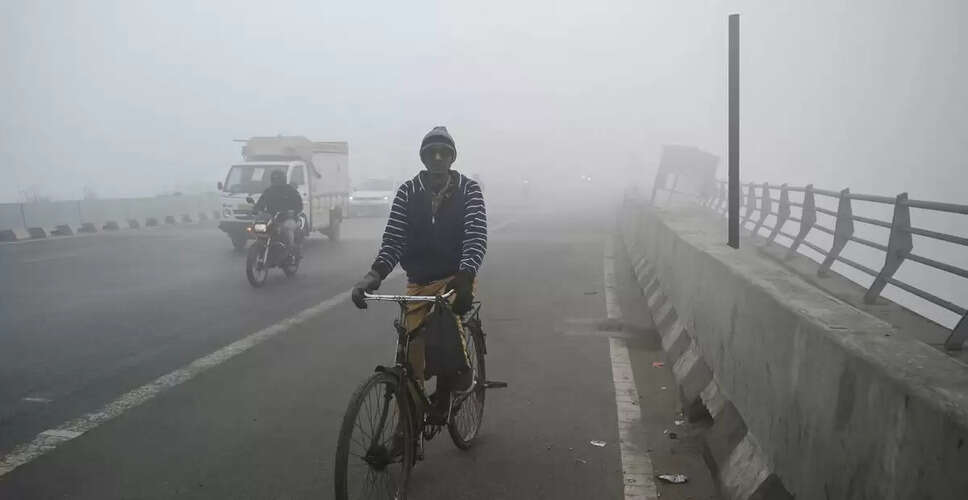
Severe Air Quality in Delhi
This December, Delhi has recorded its most severe pollution levels since 2018, with PM2.5 levels averaging 211 micrograms per cubic meter, as reported by a local news outlet.
PM2.5 refers to fine particulate matter that is significantly smaller than a human hair, making it easy to inhale and potentially harmful to health.
The National Ambient Air Quality Standards in India set a safe PM2.5 limit at 60 μg/m3 for a 24-hour period, while the World Health Organization recommends a much lower threshold of 15 μg/m3.
In comparison, the PM2.5 levels were 205.9 µg/m3 in December 2019, 194.6 µg/m3 in 2020, and 200 µg/m3 in 2021. The levels decreased to 174.3 µg/m3 in December 2022 but rose again to 201.6 µg/m3 in 2023.
Data from the Central Pollution Control Board indicates that the average daily PM2.5 exceeded 250 µg/m3 for over 31% of December days, and surpassed 150 µg/m3 for more than 82% of the month.
The peak daily average was recorded on December 14, reaching 392.6 µg/m3, while the highest previous level was 402.9 µg/m3 on December 23, 2018.
Manoj Kumar, a pollution analyst, noted that the lack of stubble burning during high pollution days suggests that year-round emissions are a significant contributor to Delhi's air quality issues.
He emphasized the need for enforceable emission reduction targets across various sectors, rather than temporary measures.
Air quality in Delhi typically worsens during winter, often ranking it as the world's most polluted capital. Factors such as stubble burning, vehicle emissions, firecracker use during festivals, lower temperatures, reduced wind speeds, and industrial emissions exacerbate the situation.
Current Air Quality Index
Delhi’s ‘Very Poor’ AQI
As of Wednesday, the Air Quality Index (AQI) in Delhi was recorded at 377, indicating 'very poor' air quality, according to the Sameer application, which provides real-time updates from the Central Pollution Control Board.
An AQI between 301 and 400 is classified as 'very poor', while values from 401 to 450 are considered 'severe'. Levels above 450 fall into the 'severe plus' category, posing serious health risks even to healthy individuals.
Throughout December, Delhi experienced five days where the AQI exceeded 400.
The air quality deteriorated to the 'severe plus' category from December 13 to 15.
Delhi and the surrounding National Capital Region are currently under Stage 3 restrictions as part of the Graded Response Action Plan (GRAP) aimed at reducing pollution.
GRAP consists of a series of escalating measures implemented to prevent further air quality degradation once specific pollution thresholds are met.
Stage 3 measures include halting non-essential construction activities and shutting down stone crushers and mining operations, in addition to previously imposed restrictions.
Additionally, primary schools up to Class 5 have shifted to a hybrid mode of learning, allowing parents and students to choose between online and offline classes where applicable.