
Environmental Crisis in Jammu and Kashmir: Over 500 Lakes Disappear
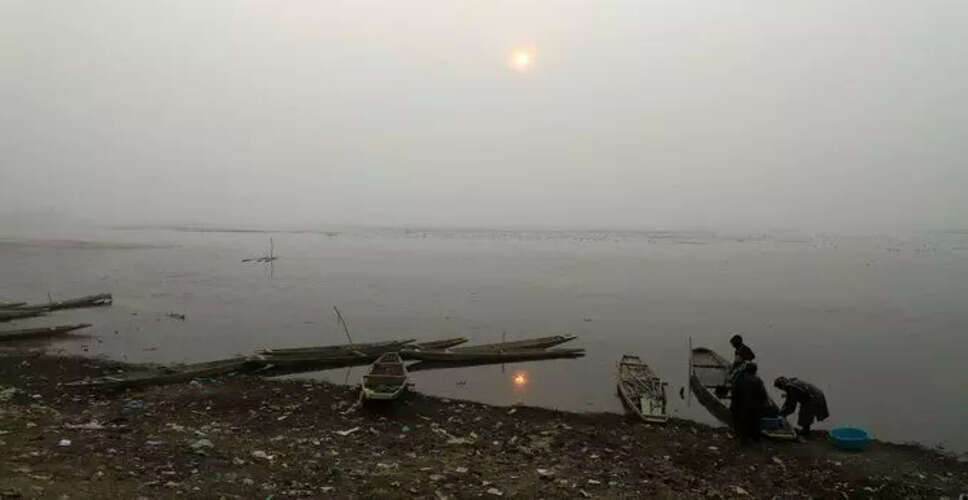

Alarming Findings from the CAG Report
Photo: @News1stShot1/X
Srinagar, April 6: A shocking report released by the Comptroller and Auditor General (CAG) has revealed that 518 lakes in Jammu and Kashmir have either completely disappeared or have significantly deteriorated.
The CAG's findings indicate a severe environmental crisis, with 518 out of 697 lakes surveyed showing signs of vanishing or degradation.
Analyzing data from 1967 to 2020, the audit discovered that 315 lakes have entirely vanished, primarily due to unchecked encroachment, urban development, and changes in land use.
The report warns of a growing ecological disaster in the region, emphasizing the need for urgent action to address the situation.
Among the seven identified water bodies that have completely dried up are Rakh-e-Arth, Sethergund Numbal, Marhama, Devpursar, Mahtan, Chandargar Numbal, and Galwal Talao, which are now 'invisible' due to their complete desiccation.
The degradation of these lakes is largely attributed to human activities, particularly the transformation of wetlands into agricultural, residential, or commercial areas. The report also highlights the failure of conservation efforts for significant water bodies like Dal and Wullar, citing untreated sewage and the ineffectiveness of responsible authorities as major contributing factors.
Out of the 315 lakes that have disappeared, 235 were overseen by the Revenue and Agriculture Departments, while 80 were under the Forest Department's management. Only six prominent lakes (Dal, Wullar, Hokersar, Manasbal, Surinsar, and Mansar) received adequate attention, leaving the remaining 691 without proper management strategies.
The CAG has recommended the establishment of a specialized, unified authority to halt further losses and facilitate the restoration of these crucial water bodies.
In a related note, a recent scientific investigation has pinpointed five high-altitude glacial lakes in the Kashmir Himalaya as being at a "very high susceptibility" to Glacial Lake Outburst Floods (GLOFs), which can be triggered by extreme weather phenomena such as cloudbursts.
Local authorities have highlighted the high-risk lakes as Bramsar and Chirsar (Kulgam), Nundkol and Gangabal (Ganderbal), and Bhagsar (Shopian). This study, focusing on susceptibility and potential downstream effects across the Kashmir Himalayas, was conducted by a team of scientists from the University of Kashmir.