
Debate Over Hindi Language Policy Intensifies Ahead of Tamil Nadu Elections

Rising Tensions Over Hindi in Tamil Nadu
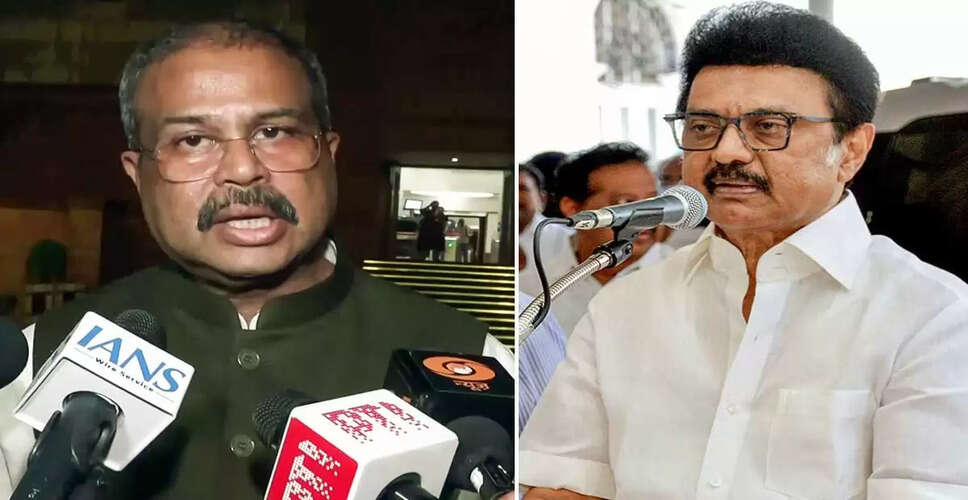
As the Tamil Nadu assembly elections approach, the issue of the Hindi language has resurfaced. A heated exchange occurred between Chief Minister M.K. Stalin and Union Education Minister Dharmendra Pradhan regarding this topic. Stalin criticized the central government's new education policy, claiming it is not a genuine reform but rather a strategic move to promote Hindi across the nation. In response, Pradhan dismissed the notion of 'imposing Hindi' as outdated political rhetoric, asserting that Hindi is not made mandatory in the National Education Policy (NEP), thus labeling Stalin's interpretation as incorrect.
The Controversy Surrounding the National Education Policy
The controversy stems from the National Education Policy 2020, which has been implemented by the central government. This policy includes a three-language formula for primary students, requiring them to learn three languages, two of which must be Indian languages. Southern states have accused the central government of attempting to impose Hindi through this new policy.
Related Read: Katpadi Assembly Seat: Minister Durai Murugan Faces a Crucial Test in AIADMK's 'Chakravyuh'
M.K. Stalin, the Chief Minister of Tamil Nadu and leader of the DMK, argued that this initiative is not a reform in education but rather a cunning attempt to spread Hindi nationwide. He questioned why the policy seems one-sided, requiring children in the south to learn Hindi while states where Hindi is predominant do not teach regional languages like Telugu or Tamil. He pointed out the lack of qualified teachers for Tamil in central schools, suggesting that it is inappropriate to preach about learning Indian languages without adequate resources and funding.
Minister Pradhan's Response to Stalin's Allegations
In response to Stalin's accusations, Education Minister Dharmendra Pradhan characterized the claim of 'imposing Hindi' as a relic of old politics. He emphasized that the NEP does not make Hindi compulsory and instead provides every child the opportunity to learn in their mother tongue. Pradhan further stated that the DMK government itself is a significant barrier to the development of children.