
Debate on Public Examination Amendment Bill Highlights Concerns Over Exam Integrity
The recent debate in the Lok Sabha over the Public Examination (Prevention of Unfair Means) Amendment Bill, 2026, has brought to light significant concerns regarding the integrity of examinations in India. BJP MP Bansuri Swaraj criticized opposition parties for their selective outrage over exam paper leaks, asserting that the issue transcends political boundaries. The bill, introduced by Minister Jitendra Singh, aims to address jurisdictional issues and establish a special task force for investigations. Swaraj emphasized the importance of maintaining fairness in examinations, which she believes is crucial for upholding the trust of hardworking students across the nation. This discussion highlights the ongoing challenges in ensuring the integrity of public examinations in India.
| Jul 28, 2026, 17:35 IST
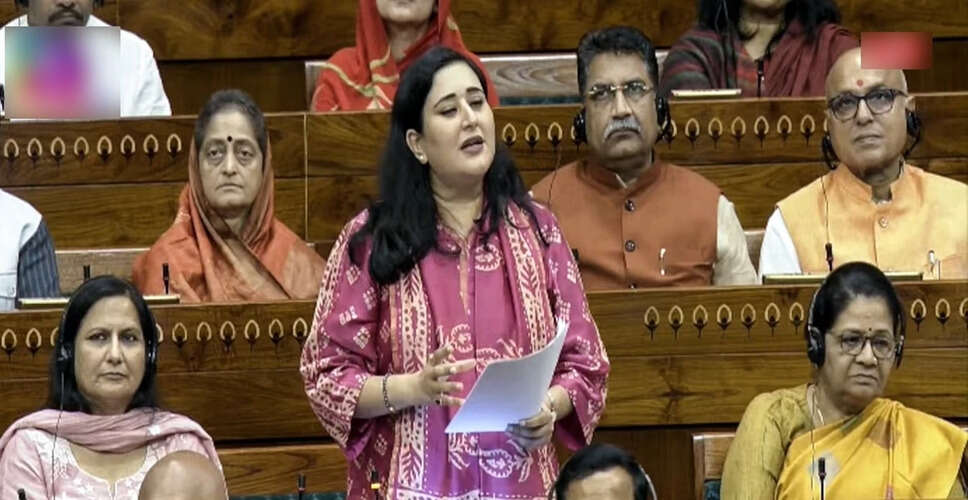

Discussion on the Public Examination Amendment Bill
During the debate in the Lok Sabha regarding the 'Public Examination (Prevention of Unfair Means) Amendment Bill, 2026', BJP MP Bansuri Swaraj accused Congress and opposition parties of showing selective outrage over the issue of exam paper leaks. She emphasized that compromising the integrity of examinations is neither a new phenomenon nor limited to any particular government. Following controversies surrounding the NEET-UG 2026 exams, Minister of State for Personnel, Public Grievances and Pensions Jitendra Singh introduced this bill on July 27.
Swaraj stated that before the opposition accuses her of 'whataboutism' (distracting from the main issue by pointing out others' mistakes), she wants to clarify that her concern is not about whataboutism but rather about the opposition's selective display of anger on certain issues. She questioned how principles can change when observing the government if this is a battle of principles. She presented this amendment as evidence of the central government's perspective, asserting, 'This amendment is proof of Prime Minister Narendra Modi's wise and responsible governance. His statement that paper leaks are a serious crime is not just rhetoric but reflects the intent of his government, which is why this amendment is being introduced today.'
The BJP MP remarked that laws should evolve with new challenges. She noted that laws are dynamic and must adapt to emerging issues. In a vast and complex democracy like India, examinations represent the most accurate and merit-based process, where a laborer's son and a CEO's daughter can sit together and answer the same questions, being evaluated on the same scale. When the fairness of such examinations is questioned, it undermines the sacred trust that connects the hardest-working students in India, the belief that only hard work and merit matter.
Swaraj alleged that an organized 'exam mafia' operates across various states and stated that this amendment aims to address jurisdictional shortcomings. She explained that the bill helps resolve and eliminate jurisdictional confusion by providing for the establishment of a special task force by the central government for investigations. It also includes provisions for setting up a special fast-track court in every state and union territory. Furthermore, the bill mandates that investigative agencies complete their inquiries within two months and that the fast-track court delivers a verdict within three months.
Stay updated with the latest political developments and major news across the country.