
Debate Erupts Over UGC Equity Regulations in Himachal Pradesh

Concerns Raised Over UGC Equity Regulations
Munish Sood
Mandi
The ongoing debate regarding the UGC Equity Regulations, 2026 has sparked significant discussion in Himachal Pradesh. The Rajput Mahasabha Himachal Pradesh Youth Wing has urged members of the General Category to refrain from attending the ‘Ashirwad Ka Diya’ event set for September 17.
This appeal has ignited a broader discussion on policy, with the organization questioning the new equity framework while expressing concerns about reservation, the creamy layer, and the principle of equal opportunity in higher education.
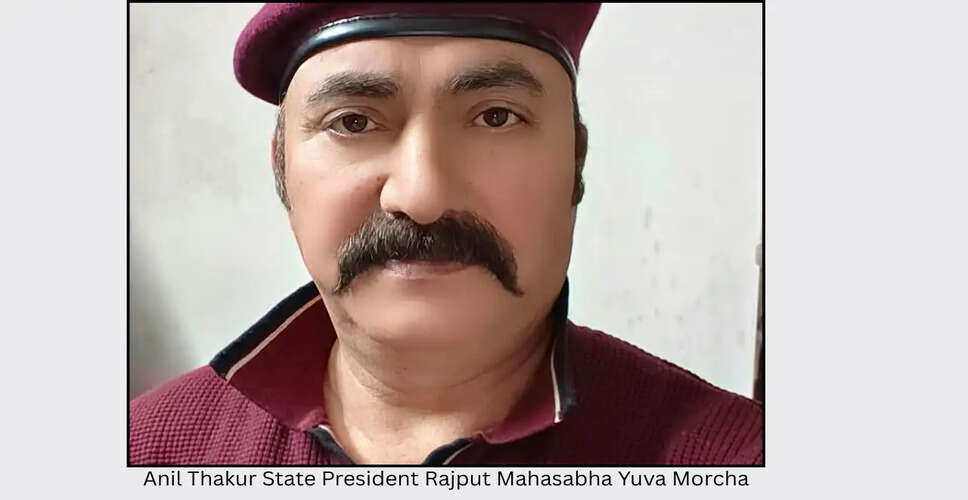
According to Anil Thakur, the state president, and Hari Krishan Thakur, the convenor of the Mandi district youth wing, their appeal is not aimed at any individual but is a call for democratic dissent against policies that they believe need more extensive discussion prior to implementation.
Understanding ‘Ashirwad Ka Diya’
The ‘Ashirwad Ka Diya’ initiative is being promoted as a community-focused program emphasizing blessings, goodwill, and public involvement. However, the Rajput Mahasabha has advised General Category families against participating, arguing that their involvement could be interpreted as endorsement of a policy framework that they fundamentally oppose.
Thus, the contention is not about the program's symbolic nature but rather about the UGC Equity Regulations, 2026, and the broader implications of reservation and affirmative action policies.
Opposition to UGC Regulations Explained
The UGC Equity Regulations, 2026 aim to enhance mechanisms for promoting equity and combating discrimination in higher education institutions. Nonetheless, these regulations have sparked a debate regarding their interpretation, scope, and potential implementation.
Critics have voiced concerns that certain aspects might inadvertently affect students from the General Category, calling for more transparency and consultation.
The issue has also taken on a legal aspect, with the regulations under judicial review and indications from the Centre that the framework is being reassessed. This has led to increased demands for a thorough review before finalizing the regulations.
The Rajput Mahasabha insists that the issues raised regarding the regulations should be discussed with students, educators, social organizations, and other stakeholders, seeking clear and documented responses to their concerns.
Discussion on Reservation and the Creamy Layer
Another significant concern highlighted by the organization pertains to the creamy layer within the reservation system.
The Youth Wing contends that reservation benefits should be directed towards those who are genuinely disadvantaged, and any modifications to the reservation system must be scrutinized in light of constitutional provisions and relevant judicial rulings.
Moreover, the organization advocates for addressing these issues through legal and social dialogue rather than through confrontation.
Their message emphasizes that discussions should center on equality, transparency, fairness, and constitutional rights, avoiding personal or political conflicts.
The organization has called on General Category members to express their dissent in a peaceful and democratic manner, steering clear of personal attacks or situations that could escalate tensions.
The controversy surrounding ‘Ashirwad Ka Diya’ thus highlights a much larger discourse on equity in higher education, reservation, affirmative action, and the essence of equal opportunity. The immediate call to abstain from the September 17 event has intensified this debate in Himachal Pradesh.