
Rising Prices Amid Assam Flood Crisis Raise Alarm

Concerns Over Price Hikes in Flood-Affected Assam
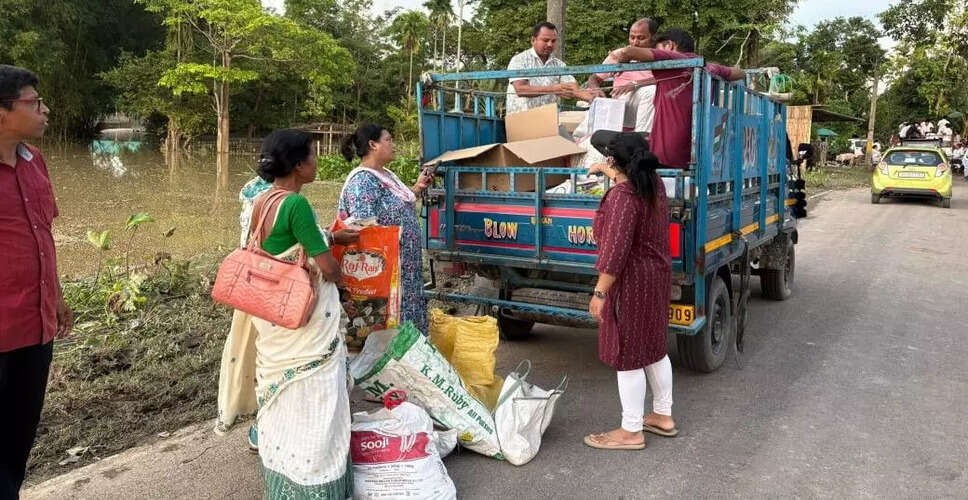
As relief and support continue to reach flood affected communities across Assam, fresh reports of price hike spark concerns (Photo: @himantabiswa/X)
As numerous families in Upper Assam struggle to find their next meal and recover from devastating floods, the surge in prices for essential goods has raised significant concerns, prompting calls for government action and an investigation.
Residents and merchants in the flood-impacted regions of Sivasagar, Nazira, Moran, Charaideo, and Jorhat have observed notable increases in the costs of vital food items, especially rice, sugar, and mustard oil, over recent weeks.
Gautam Gogoi, a trader from Charaideo, noted, "The cost of rice has risen by Rs 6-7 per kg. Additionally, mustard oil has seen a hike of Rs 9-10 per litre, while sugar prices have increased by approximately Rs 5 per kg." He indicated that the price surge seems to have originated from suppliers and wholesale markets.
The price of rice has particularly surged, with nearly all varieties experiencing an increase of Rs 4-6 per kg.
Market analyses suggest that rice prices have escalated by nearly Rs 400-600 per quintal, further straining families already facing financial hardships due to flood damages.
The reasons behind this sudden price increase remain ambiguous. Some traders attribute it to heightened procurement costs, while others claim ignorance regarding the factors influencing the price surge at the source.
Prakash Burhagohain, another trader from Sivasagar, expressed concern for consumers, stating, "When the price of a single sack of rice rises by Rs 300-400, it’s natural for customers to face difficulties."
Burhagohain pointed out that the price increase was evident in wholesale markets before the goods reached retailers.
These price hikes have alarmed consumers, with some suspecting that traders might be exploiting the flood situation to inflate prices.
Political parties and civil society organizations have criticized the situation, urging the government to oversee markets and prevent profiteering during this humanitarian crisis.
Raju Phukan, secretary of the Assam Jatiya Parishad (AJP), called for an immediate investigation, asserting that such price increases during a disaster are unacceptable.
"The Chief Minister and the Food and Civil Supplies Minister must look into why essential food item prices have surged while people are enduring a disaster. Such price hikes during calamities are intolerable," Phukan stated.
He warned that public protests could ensue if authorities do not take action.
"If the government does not manage the price increases, the public will not hesitate to protest," he added.
Phukan also alleged that certain segments of the trading community might be capitalizing on the current situation.
The issue of rising prices was also discussed during the recent Monsoon Session of the Assam Legislative Assembly.
MLA Akhil Gogoi protested, claiming that syndicate networks were contributing to the rise in essential commodity prices, sparking debate both inside and outside the Assembly.
During a discussion on price increases in the Assembly on July 27, Parliamentary Affairs Minister Pijush Hazarika stated that Assam's inflation rate aligns with the national average of around 4-5%.
In response to concerns raised by Leader of the Opposition Wazed Ali Choudhury, Hazarika acknowledged that while prices for items like sugar, onion, and mustard oil have risen, the government is actively monitoring the situation.
The Centre’s Department of Consumer Affairs also operates a daily price-monitoring system for essential commodities, including rice, sugar, and mustard oil, based on market data from across the nation.