
Exploring the Rich Butterfly Diversity of Hoollongapar Sanctuary

A New Insight into Hoollongapar Sanctuary
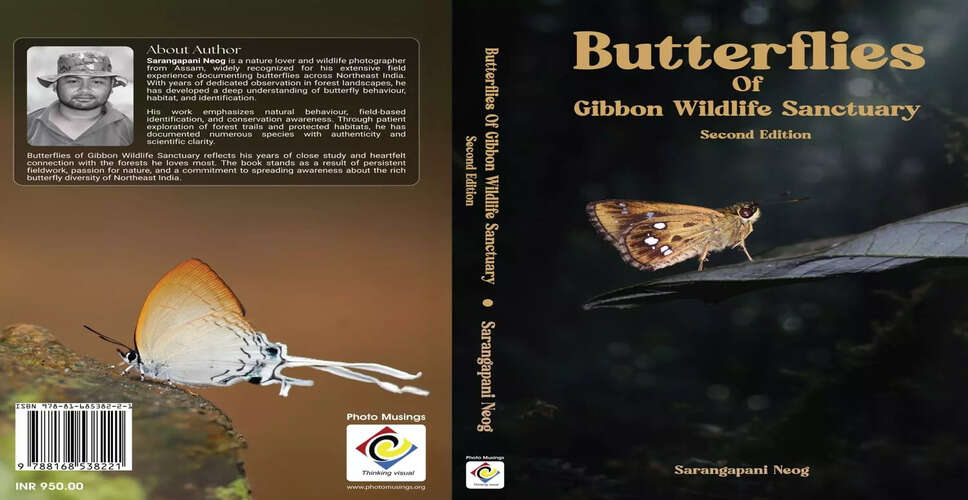
Cover of Butterflies of Gibbon Wildlife Sanctuary by Sarangapani Neog. (Photo:ranojpeguassam/X)
New Delhi, Jul 19: The Hoollongapar Sanctuary in Assam, known for its population of the endangered western hoolock gibbon, is also recognized as a prime habitat for butterflies, according to a newly released book.
In Butterflies of Gibbon Wildlife Sanctuary, naturalist and wildlife photographer Sarangapani Neog catalogs 281 butterfly species found within this sanctuary located in Jorhat district.
Many of these butterflies are referred to as "dream butterflies" by lepidopterists due to their rarity and elusive characteristics.
Neog highlights that unique species such as the Assam Forest Bob (Scobura parawoolletti), Red-veined Lancer (Pyroneura niasana), and Yellow-veined Lancer (Pyroneura latoia) inhabit the Hollongapar Gibbon Wildlife Sanctuary.
"The sanctuary features a complex multi-layered forest canopy, with towering Hollong trees forming the upper layer and dense shrubs and herbs below. This diverse vegetation creates various microhabitats that cater to different butterfly species," Neog explained.
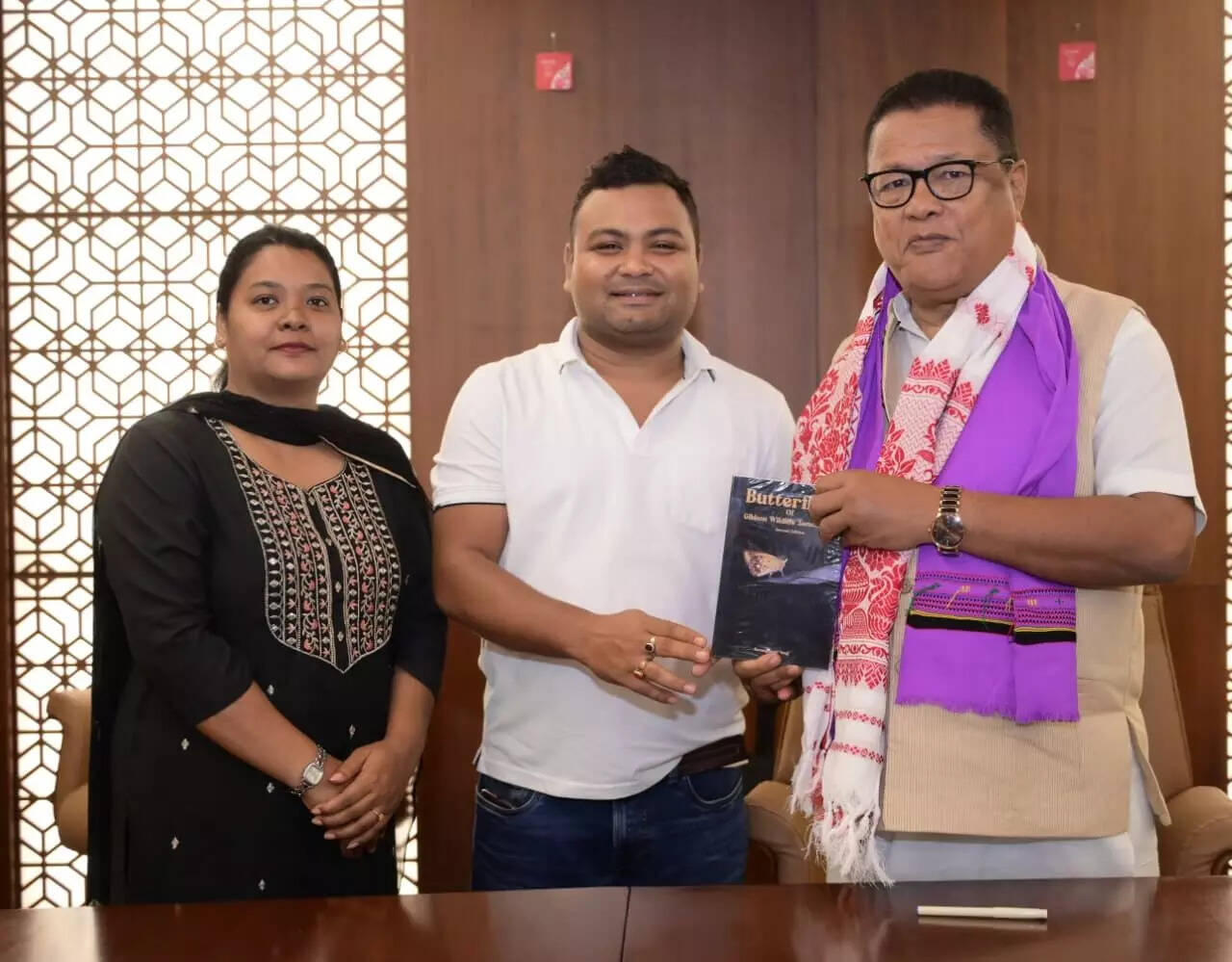
File image of Naturalist Neog with Education Minister Ranoj Pegu. (Photo:ranojpeguassam/X)
Neog notes that various ecological factors contribute to making the Hollongapar Gibbon Wildlife Sanctuary an ideal environment for butterflies.
"The sanctuary's rich variety of trees, shrubs, climbers, grasses, and herbs offers plentiful host plants for caterpillars and nectar sources for adult butterflies. The shaded forest paths, sunny clearings, streams, and mud-puddling areas further enhance the diversity of butterflies, making it a fantastic spot for butterfly enthusiasts," he added.
Despite its modest size of 20.98 square kilometers, the sanctuary is home to seven primate species, including the western hoolock gibbon, as well as Asian elephants, leopards, leopard cats, fishing cats, civets, wild boars, barking deer, pangolins, numerous reptiles, birds, squirrels, and countless invertebrates.
Neog emphasizes that the sanctuary is easily accessible for butterfly observation. "Its well-maintained trails and guided trekking options provide visitors, researchers, photographers, and naturalists with excellent opportunities to observe and photograph butterflies in their natural settings with minimal disturbance," he stated.
A notable feature of Neog's book, now in its second edition, is its photographic identification system, which simplifies the identification process for readers.
"The images showcase the actual field appearance, wing patterns, color variations, posture, and other distinguishing traits that observers may encounter during field surveys," he explained.
Each species is dedicated a page for quick reference, including wingspan, scientific name, and taxonomic details.
Field identification keys based on visible photographic features and comparisons with similar species are included to prevent misidentification.
The book also indicates the best seasons for observing each butterfly species.
"I have incorporated practical field notes derived from extensive field experience, not just published literature," he added.
This 321-page book, published by Photo Musings Colour Lab, features endorsements from former chief editor of Butterflies of India Purnendu Roy, butterfly experts and researchers Isaac Kehimkar, Peter Smetacek, and Saito Motoki, as well as Young James, chairman of the Lepidoptera Society Hong Kong.
PTI