
Devastation in Lukhurakhan: Flood Aftermath Leaves Residents in Despair
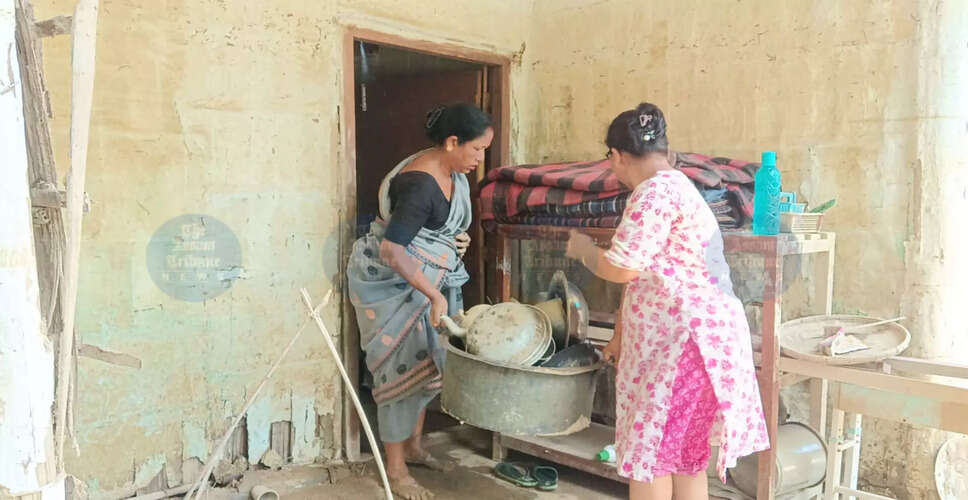

Flood Devastation in Upper Assam
Residents carrying utensils covered in mud
Jorhat, July 27: In Upper Assam, floodwaters are beginning to recede, yet the village of Lukhurakhan in the Selenghat area of Mariani is left grappling with extensive destruction that locals believe will take years to recover from.
Heavy rainfall on July 20 caused the Jaji and Puthi rivers to overflow, inundating numerous villages in the vicinity, including Beltol, Tengabari, Hatimuria, Duliya, Lukhurakhan, Pani Gaon, Panitola, Lefera, Halowa Pathar, and Kowargaon.
In the aftermath of the flooding, Lukhurakhan presents a dire scene. Homes are buried under thick layers of mud, furniture is ruined, and agricultural lands that once supported families have turned into muddy wastelands.
The village is enveloped in silence, interrupted only by the sounds of residents scraping mud from their homes and salvaging whatever they can.
Mariani MLA Rupjyoti Kurmi, who visited the area, described the destruction as unprecedented.
"Homes have been destroyed, and livestock has perished. Anyone who visits this village today will leave with tears in their eyes. No one expected such a flood to hit us. Our primary concern now is how these families will rebuild their lives," he stated.
Inside the damaged homes, overturned cupboards, buried utensils, and scattered personal belongings paint a picture of chaos. The thick sludge covering every room complicates the cleanup process, making it slow and laborious.
The floods have decimated crops, killed livestock, and washed away years of savings, leaving many families with little more than the clothes they managed to escape with.
Residents have laid out mattresses, schoolbags, books, utensils, and broken furniture under the sun, hoping to salvage some belongings.
"We understand these items may never be usable again, but we are drying them in the hope that something can still be saved," shared a local.
For many, this flood was an unprecedented event.
"At 50 years old, I have never witnessed a flood like this. The water rose above our roof. We barely escaped with our lives. If we had been delayed by just ten minutes, we would have been swept away," recounted a survivor.
Another resident, standing amidst the ruins of his home, expressed his despair.
"Our house, granary, and everything we owned are gone. We are uncertain about our survival or what we will eat. We have to start from scratch," he lamented.
Children have been particularly hard hit, with their schoolbags and textbooks, now soaked and ruined, piled outside their homes alongside other damaged items.
"All the books are destroyed. We brought them outside just to discard them. We don't even have enough clothes to wear now," another resident added.
As residents embark on the challenging task of cleaning their homes, concerns about public health are rising.
Stagnant water, mud, and unsanitary conditions have raised fears of disease outbreaks, complicating the recovery efforts.
For the people of Lukhurakhan, while the floodwaters may have receded, the true struggle is just beginning.
Rebuilding homes, restoring livelihoods, and healing from the emotional trauma of this disaster will demand much more than the mere retreat of the rivers that disrupted their lives in mere hours.