
Concerns Rise Over Illegal Elephant Trade in Assam Following Arrest in Rajasthan
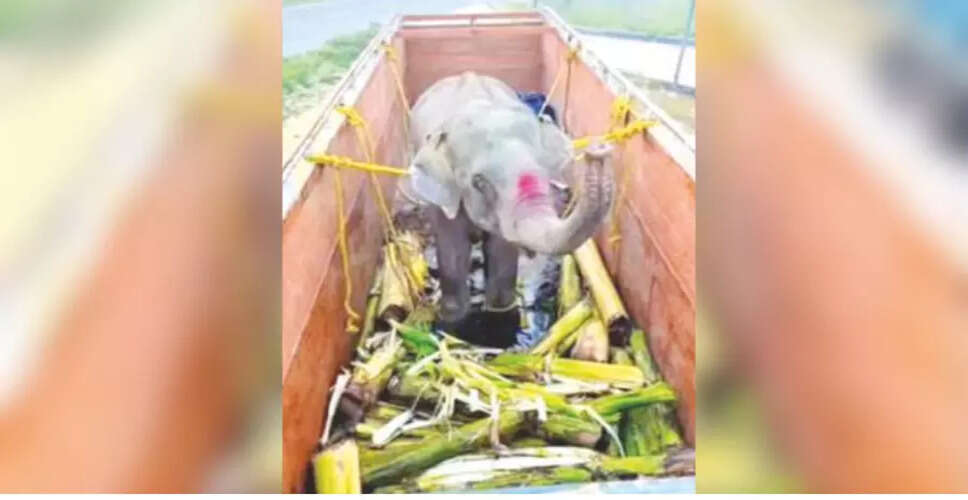

Illegal Elephant Transportation Raises Alarms
Mohan, the elephant, originally from Lakhimpur district, was being held in Golaghat district during its transport.
Guwahati, June 18: The recent apprehension of an individual in Rajasthan for the illegal sale and transportation of an elephant named Mohan from Assam has sparked serious concerns regarding the inadequate oversight of elephant transfer protocols, leaving these majestic creatures susceptible to illegal trade and trafficking.
As of now, no arrests have been made in Assam related to this case.
Investigations following the arrest have revealed that Mohan's transport was facilitated using counterfeit documents, including a forged signature of the Chief Wildlife Warden of Assam.
Dr. Vinay Gupta, Principal Chief Conservator of Forests (Wildlife) & Chief Wildlife Warden of Assam, stated, “This was a case of illegal transportation to Jaipur (Rajasthan) using falsified documents. The signature of the Chief Wildlife Warden was also forged. We contacted the Rajasthan forest department, which acted swiftly to seize the elephant. The individual was arrested, and a case has been filed in CJM Court, Jaipur. The case has now been escalated to the Rajasthan High Court.”
The elephant is currently under the care of the Rajasthan forest department. “We are eager to facilitate its return by pursuing a legal resolution. We have also filed cases in CJM Court, Lakhimpur, and at the Dispur police station. An inquiry has been initiated by our officials,” he added.
Although Mohan was from Lakhimpur district, it was located in Golaghat district at the time of its transport.
Wildlife advocates have raised concerns about potential misconduct regarding the planned transfer or sale of another adult male elephant named Ram Prasad, which is reportedly intended for a buyer in a southern state.
Shyamanta Ram Phookun, managing trustee of Elephant Monitors Assam, urged the forest department and state government to take immediate action against the proposed transfer to prevent illegal sales and trafficking of elephants from Assam to other regions in India.
Dr. Gupta, however, refuted any knowledge of such developments, asserting, “We are unaware of this situation, but we will take immediate action if we receive any information regarding it.”
The recent events highlight significant gaps in the current elephant transfer protocols, which wildlife activists claim enable the covert movement of elephants out of the state.
Mubina Akhtar, a conservationist from Kaziranga Wildlife Society, expressed concern, stating, “The frequent reports of illegal elephant transportation raise serious questions about whether the legal procedures mandated by the Wildlife (Protection) Act, 1972 and the Captive Elephant (Transfer or Transport) Rules, 2024 are being adhered to.”
“Asian elephants are classified as Schedule I animals and deserve the highest level of legal protection. Any transfer, transport, sale, donation, or movement of such elephants outside Assam must be thoroughly scrutinized, documented, and justified according to the law. Alarmingly, this does not appear to be occurring,” she added.
Akhtar emphasized that the transfer of elephants requires a comprehensive and rigorous process, including physical verifications, genetic profiling, ownership verification, veterinary certificates, health certificates, fitness-for-transport certificates, quarantine records, and assessments of the elephants' physical and mental well-being. She questioned how an elephant could be so easily removed from the state.
“A thorough investigation into this situation is necessary, as it suggests a deeply rooted network. Given that similar cases have occurred in the past, all such instances should be included in the investigation,” she stated.
Akhtar called for a halt to any further transfer, transport, sale, donation, or movement of captive elephants from Assam until full compliance with the Wildlife (Protection) Act, 1972 and the Captive Elephant (Transfer or Transport) Rules, 2024 is verified, ensuring all statutory requirements are met and documented.