
Assam Faces Severe Human-Elephant Conflict: Study Reveals Alarming Statistics

Overview of Human-Elephant Conflict in Assam
The research highlights Assam's dual challenge of protecting both people and elephants amid escalating human-elephant conflict across the state.
Guwahati, June 14: Recent data indicates that Assam has the highest number of elephant fatalities due to train collisions and poisoning from 2009 to 2024.
A study titled ‘Reframing Human-Elephant Conflict in India through context dependent coexistence strategies,’ conducted by the Ministry of Environment, Forest and Climate Change (MoEF&CC), the Wildlife Institute of India (WII), and the Academy of Scientific and Innovative Research (AcSIR), reveals that Assam ranks second in elephant deaths caused by human activities, following Odisha.
The research emphasizes that Human-Elephant Conflict (HEC) has become a significant conservation and socio-economic issue in India, impacting both human lives and elephant populations.
“In the last 16 years, there have been 7,868 human fatalities linked to elephant encounters, averaging nearly 500 deaths annually. Notably, four states—Odisha, Jharkhand, West Bengal, and Assam—account for about 70% of these incidents, marking them as critical conflict zones. During this timeframe, 1,653 elephants lost their lives due to human-related causes, with electrocution, train collisions, poaching, and poisoning being the most common threats,” the study states.
HEC has led to extensive crop destruction, human injuries, and retaliatory killings of elephants across various states.
“Factors such as habitat fragmentation, agricultural expansion, and linear infrastructure development have exacerbated HEC. The primary causes of elephant mortality include electrocution, train accidents, and direct human conflict. The issue of anthropogenic mortality among elephants in India remains a pressing conservation challenge,” the report highlights.
Over the 16-year period, 1,653 elephant deaths were documented, with electrocution being the leading cause, resulting in 1,105 fatalities. Odisha (221), Karnataka (181), and Assam (172) reported the highest instances, while Tamil Nadu (131) and West Bengal (86) also faced significant losses.
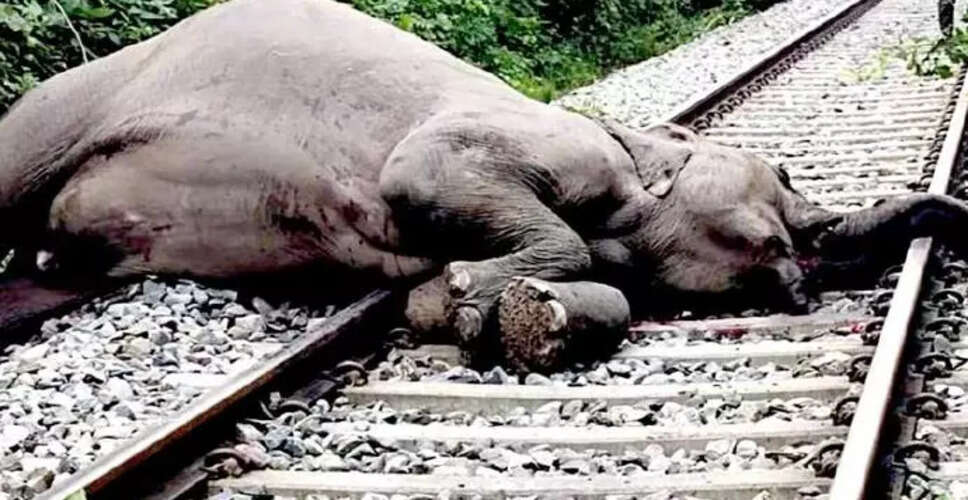
Train collisions accounted for 225 elephant deaths, with Assam (82) and West Bengal (62) being the most affected states.
Poisoning caused 79 deaths, predominantly in Assam (45) and Odisha (15), although Odisha has not reported any poisoning incidents in the last seven years.
Poaching resulted in 214 elephant deaths, with Odisha (66), Assam (27), Kerala (24), Meghalaya (23), and Karnataka and Tamil Nadu (22 each) being the most impacted.
“Odisha recorded a total of 345 elephant fatalities, with electrocution responsible for 221 deaths (approximately 64%), and poaching accounting for 66 deaths. In Assam, the second-highest number of deaths was noted at 326, with electrocution and train accidents contributing significantly,” the study elaborates.
Additionally, 7,868 human deaths due to elephant encounters were reported across 16 states in India from 2009 to 2024, averaging 492 deaths annually.
Odisha had the highest casualties (1,495), followed by Jharkhand (1,205), West Bengal (1,306), and Assam (1,161).
“These four states together accounted for nearly 70% of all reported human fatalities during the study period. Other states with notable numbers included Tamil Nadu (747), Chhattisgarh (782), and Karnataka (520),” the study notes.
The findings indicate that the Central and Eastern regions of India are the primary conflict hotspots, with consistently high human fatalities, while Southern and Northeastern states show moderate levels of conflict.
The study also assessed the effectiveness of current mitigation strategies by analyzing mortality data and conducting perception surveys with 428 stakeholders, including Forest Department officials, researchers, and NGOs across 33 elephant reserves and range states.
The results indicated that solar-powered fences and mobile early warning systems are viewed as effective, especially in fragmented landscapes.
“Conversely, structural barriers like trenches and concrete walls are seen as costly, hard to maintain, and less effective over time. Compensation schemes, while essential, suffer from delays and inadequate rates, undermining community trust. Rapid Response Teams play a crucial role in conflict management but face challenges due to insufficient training and resources. Overall, India’s HEC policy framework is fragmented, requiring tailored interventions and enhanced community involvement,” the report concludes.
It emphasizes the need for integrating mitigation strategies into broader land-use planning and ecological restoration efforts.
“Adopting adaptive, participatory, and technology-driven approaches can help India reduce human and elephant fatalities while fostering long-term coexistence,” the report suggests.