
Court Ruling Declares Trump's Universal Tariff Illegal
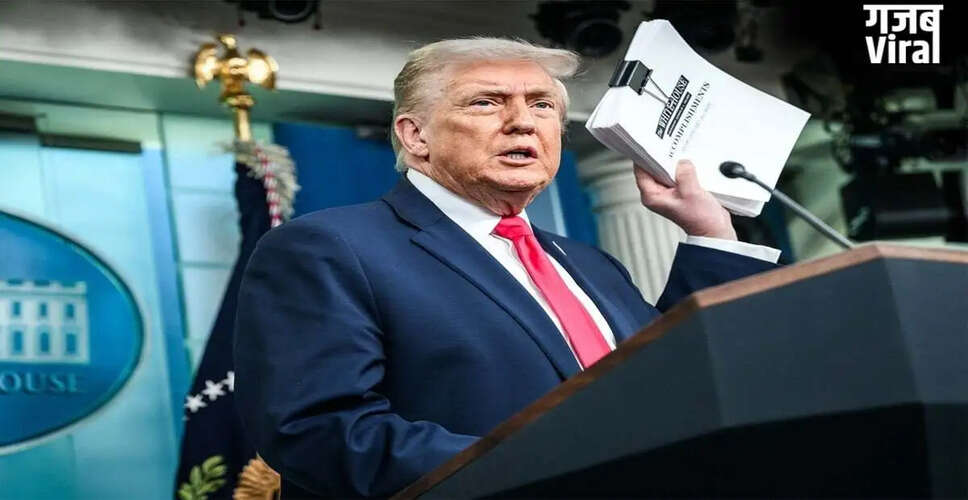

Significant Legal Setback for Trump's Tariff Policy
In a recent ruling, the U.S. International Trade Court dealt a blow to President Donald Trump's tariff strategy. The court determined that the 10% universal tariff imposed on imports from India and other nations by the Trump administration is illegal. This decision has created a climate of uncertainty among companies worldwide. It follows a February ruling by the U.S. Supreme Court that rejected Trump's attempts to implement global reciprocal tariffs through the International Emergency Economic Powers Act.
Following the Supreme Court's decision, the Trump administration had enacted a 10% "universal" tariff on all global imports, utilizing economic powers under Section 122 of the Trade Act of 1974. This legal provision grants the president the authority to impose tariffs to address significant payment balance deficits faced by the United States.
The New York-based International Trade Court found, by a majority of 21, that the Trump administration failed to meet the necessary conditions for declaring the import surcharge valid. The court's ruling emphasized that the president's declaration did not adequately claim the existence of the required conditions. Former U.S. trade negotiators believe that while this ruling is a setback for Trump, it will not deter his administration from pursuing global tariffs through alternative means. Washington has already initiated plans to impose new global tariffs under Section 301 of the Trade Act of 1974, which allows tariffs on countries engaging in unfair trade practices against the U.S.
Mark Linscott, a senior advisor on trade policy at the U.S.-India Strategic Partnership Forum, stated that while this is a clear setback for the Trump administration, it is unlikely to alter plans to use Section 301 investigations in place of the IEEPA tariffs. The administration is expected to be in a much stronger position to face future challenges regarding Section 301 tariffs and is clearly planning to leverage these tariffs to uphold existing agreements and finalize pending deals, such as interim agreements with India.