
Court Initiates Criminal Contempt Proceedings Against AAP Leaders Over Excise Policy Case
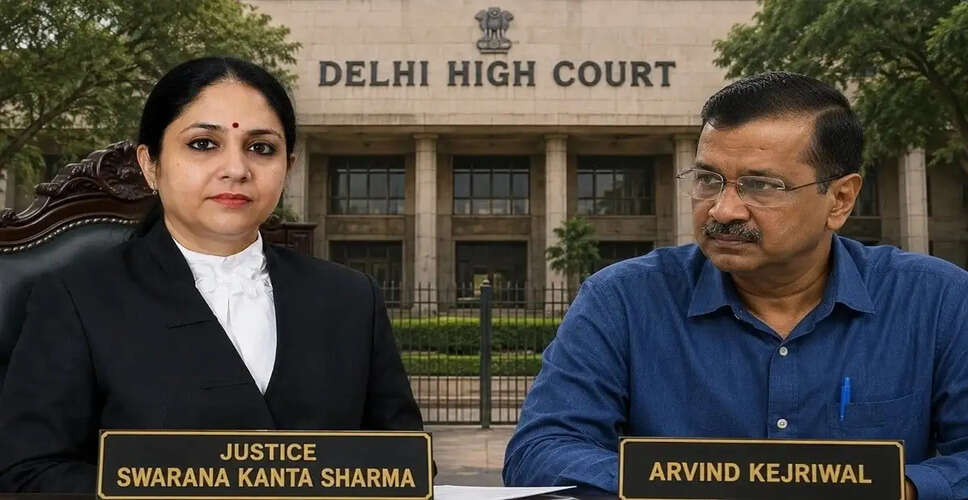

Contempt Proceedings Launched by Justice Swarn Kanta Sharma
On Thursday, Justice Swarn Kanta Sharma commenced criminal contempt proceedings against several leaders of the Aam Aadmi Party (AAP), including Arvind Kejriwal, Manish Sisodia, Durgesh Pathak, Sanjay Singh, Vinay Mishra, and Saurabh Bhardwaj, in connection with the excise policy case. The judge also stated that she would not entertain the CBI's review petition challenging the acquittal of Kejriwal and others in this matter. While announcing the contempt proceedings, Justice Sharma remarked that Kejriwal had orchestrated a campaign to tarnish her image.
Justice Sharma emphasized that the digital smear campaign was not only directed against her as a judge but also posed a threat to the entire judiciary and the judicial process.
The judge noted that the unfortunate statements and actions of respondent number 18, Arvind Kejriwal, appeared to fall under the scope of criminal contempt as defined in Section 2C of the Contempt of Courts Act. She further indicated that similar actions by Manish Sisodia and respondent number 19, Durgesh Pathak, who had also written letters and posted content deemed contemptuous, were also subject to the same legal provisions.
Justice Sharma stressed that allowing such actions to proceed unchecked could send a message that courts could be subjected to organized public pressure. The court observed that while cases were being resolved through constitutional processes within the courtroom, a parallel narrative against the court and judges was being constructed through selective publicity and digital platforms outside the courtroom.
Concerns Over Edited Videos
The judge also expressed concerns regarding some 'edited' videos of her lecture at a university in Varanasi, Uttar Pradesh. The court noted with particular alarm that videos related to her lecture at Mahatma Gandhi Kashi Vidyapeeth had been cut, edited, and misleadingly circulated. This situation was highlighted as one of the rare instances where a sitting judge's edited videos were repeatedly disseminated and promoted by political figures, spokespersons, social media accounts, and digital platforms to support allegations of political affiliation.