
Couple Arrested in Assam for Unlawful Adoption of Newborn
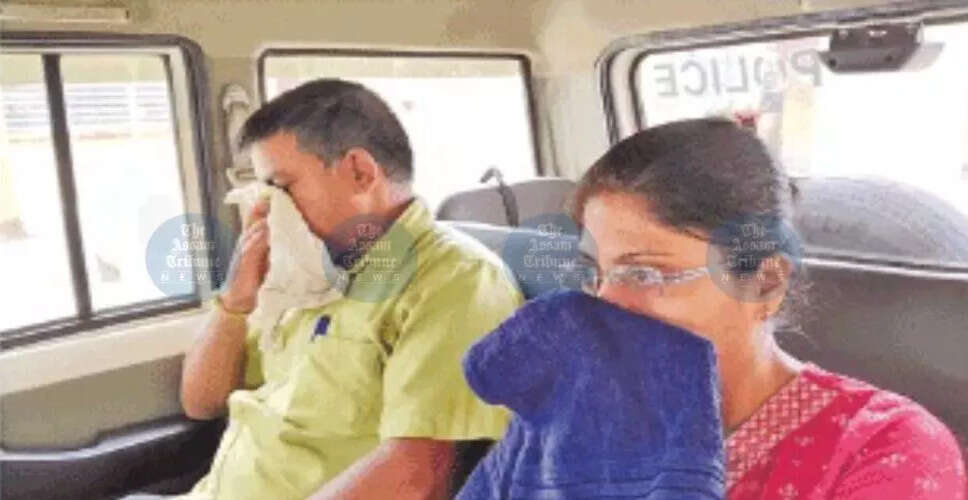
Incident in Dhakuakhana Leads to Arrest
Lakhimpur, Aug 4: A compassionate gesture turned into a legal issue in Assam's Dhakuakhana when a couple from Guwahati was detained for illegally adopting a newborn. The child was reportedly given to them by its mother without adhering to the necessary legal protocols.
This situation arose after Mintu Koch filed a First Information Report (FIR) on August 2, accusing his estranged wife, Pompi Dutta, of 'selling' their newborn to the couple on July 29.
Following this complaint, the Dhakuakhana Police initiated a case (DKA PS Case No. 60/2025 U/S-143(4) BNS, in conjunction with Section 81 of the Juvenile Justice (Care & Protection of Children) Act, 2015) and apprehended the couple.
Currently, Pompi Dutta and her mother are under police interrogation.
Pompi stated that she was three months pregnant in February when her husband allegedly assaulted her and left her. Since then, she has been residing with her mother in Dhakuakhana, where she gave birth at a private nursing facility in North Lakhimpur.
She asserted that she did not receive any monetary compensation for giving up her child, although she acknowledged that the couple from Guwahati covered her medical expenses.
"I only wished for a better future for my child," she reportedly told the authorities, highlighting her husband's abusive conduct and lack of support during her pregnancy.
Initial investigations indicate that the adoptive couple might not have been aware of the legal adoption requirements in India.
Officials have emphasized that all adoptions must be processed through the Central Adoption Resource Authority (CARA), which is the governing body under the Ministry of Women & Child Development responsible for overseeing both domestic and international adoptions.
CARA's regulations are designed to prevent the misuse of adoption processes, including child trafficking and illegal custody transfers.
The lack of awareness regarding CARA's functions, particularly in rural regions, remains a significant issue. Ongoing police investigations are expected to shed more light on the matter.