
Could Military Action Against Iran Be on the Horizon? Trump Weighs Options
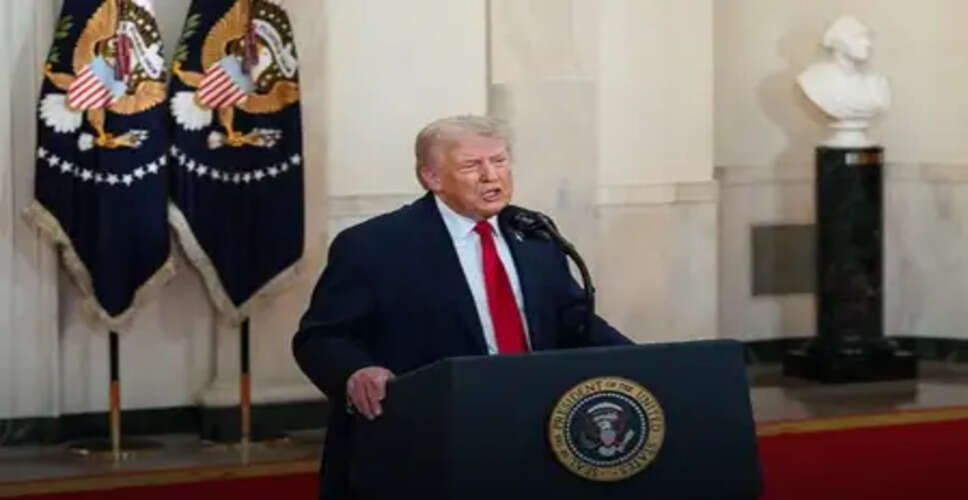

Trump's Stance on Iran: Military Action and Diplomatic Efforts
Washington: President Donald Trump has indicated that the United States may consider resuming military operations against Iran if diplomatic negotiations do not yield results, while asserting that he is not in a hurry to finalize a deal after weeks of escalating tensions.
Trump stated, "I could finalize a deal immediately... but I aim for a lasting agreement," adding that he would resort to military action against the remaining 25% of targets if Iran does not comply.
These comments emerge during a delicate ceasefire following a US-led military initiative that Trump claims has already significantly weakened Iran's military capabilities.
"We have successfully targeted around 75% of our objectives," he noted, detailing the damage inflicted on Iran's naval, aerial, and missile assets.
The President emphasized that the US maintains "total control" over the crucial Strait of Hormuz, effectively restricting Iran's economic activities. He remarked, "If we were to reopen the strait, they could earn $500 million daily. I refuse to let them profit until we resolve this issue."
Trump suggested that Iran's leadership is currently unstable due to ongoing military actions, stating, "They are uncertain about who is in charge... they are in fierce disputes over control."
Although he previously hinted that the conflict might conclude within four to six weeks, Trump refrained from providing a specific timeline for resolution. "I don’t want to rush it... we have ample time," he asserted, claiming that Iran is facing increased pressure from economic difficulties and disrupted oil supplies.
He acknowledged that Americans might experience short-term economic repercussions, including rising fuel prices. "For a brief period," he responded when asked about potential cost increases, framing it as a necessary measure to prevent Iran from developing nuclear weapons.
"This is fundamentally about nuclear armament. They must not possess a nuclear bomb, and they will not acquire one," Trump declared.
Simultaneously, he dismissed the possibility of the US employing nuclear weapons, stating, "No, I would not consider it. Nuclear weapons should never be utilized by anyone."
He also mentioned a humanitarian aspect, revealing that eight women facing execution in Iran would be released following a US intervention.
These statements illustrate a dual strategy that combines military pressure with conditional diplomacy, with Trump stressing that any agreement must permanently obstruct Iran's nuclear aspirations.