
Controversy Surrounds U.S. Decision-Making in Iran War
Shifting Perspectives on U.S. Military Actions
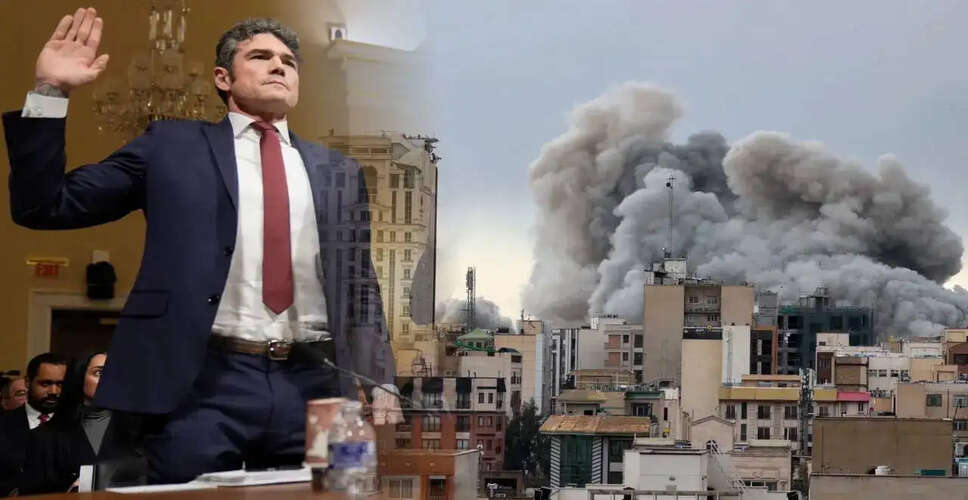
The discussion regarding the U.S. involvement in the Iran conflict has intensified. Joe Kent, who resigned as the Director of the National Counterterrorism Center earlier this year, has claimed that President Donald Trump was not presented with a comprehensive range of strategic options prior to the initiation of military actions. Kent asserts that the decision-making process was limited to a narrow advisory group. He stated in an interview, “A very small circle was created around President Trump, and he didn’t receive any alternative viewpoints,” describing this as an “echo chamber” scenario. His comments resonate with broader concerns from analysts and insiders about the exclusion of dissenting opinions at a crucial moment.
SMALL CIRCLE convinced Trump post-Venezuela he could 'JUST GO IN' with IRAN — Joe Kent'BOMB the IRGC attacking protesters — we’d be LIBERATORS', Israel pitched to TrumpSays 'Trump was skeptical', but 'they did a REALLY GOOD JOB creating an ECHO CHAMBER around him' pic.twitter.com/R4ERHCbOHg
— RT (@RT_com) March 31, 2026
Kent’s assertions delve deeper than procedural critiques; they question the foundations of one of the most significant military decisions in recent history.
Comparing Venezuela and Iran: A Flawed Strategy?
The Venezuela Template — And A Misreading Of Iran?
Central to Kent’s critique is a comparison he draws between the U.S. approach to Venezuela and Iran. He argues that Trump was misled into thinking that the U.S. could replicate the perceived success in Venezuela, where pressure on Nicolás Maduro’s regime was viewed by some in Washington as a model for destabilization. Kent suggests that this experience fostered the belief that similar military tactics — such as targeted strikes against leadership and security forces — could lead to an internal collapse in Iran. “Essentially… we would be welcomed as liberators,” he remarked, likening it to previous U.S. interventions. He proposed that eliminating key figures within the Islamic Revolutionary Guard Corps would empower protest movements.
However, critics contend that such views oversimplify Iran’s complex political landscape, which features multiple power centers and significant institutional resilience.
The Misconception of an Easy Conflict
Protest Momentum And The ‘Easy War’ Narrative
Kent further asserts that the protests in Iran earlier this year were considered in the war strategy. He claims that unrest driven by economic difficulties was seen as a chance to escalate military pressure. The narrative presented to Trump suggested that strikes against regime elements would coincide with domestic dissent, potentially creating a tipping point. Kent argues that this was framed as a low-risk operation. However, the reality on the ground — characterized by persistent resistance, regional tensions, and economic repercussions — has complicated this assumption.
Israel's Influence in the Conflict
Israel’s Role — Allegation And Denial
A significant aspect of Kent’s claims revolves around the influence of Israel. He has repeatedly indicated that Israeli strategic goals played a role in pushing towards conflict, a claim that both Washington and Tel Aviv have vehemently denied. Kent’s resignation letter previously stated that Iran posed “no imminent threat” to the U.S., arguing that the decision for war was swayed by external pressures — a stance that has faced considerable backlash within U.S. political circles. Officials from the Trump administration maintain that the decision was based on “strong and compelling evidence” regarding threats from Iran’s missile and nuclear ambitions. This divergence underscores a deeper divide not only over policy but also regarding intelligence interpretation and strategic intent.
Internal Dissent and Strategic Implications
A System Under Strain
Kent’s comments emerge amid rising internal dissent within segments of the U.S. political and security establishment. His resignation marked one of the first notable breaks regarding the Iran war, with subsequent interviews amplifying concerns about:
- Limited internal debate
- Intelligence framing
- Strategic overconfidence
- Lack of post-conflict planning
The Broader Implications of the Iran War
The Larger Strategic Question
At its essence, Kent’s intervention raises a significant question: Was the Iran war a deliberate strategic decision, or was it influenced by limited inputs and overly optimistic assumptions? The answer may not be readily available. However, it is evident that the conflict has already impacted global energy markets, regional stability, and geopolitical relationships. As the situation evolves, scrutiny over the decision-making process is likely to increase. As suggested by a former official, the narrative may extend beyond the war itself to encompass the processes that led to it.