
Controversy Erupts in Varanasi Over Iftar Party on Ganga River
Fourteen Arrested for Religious Insensitivity
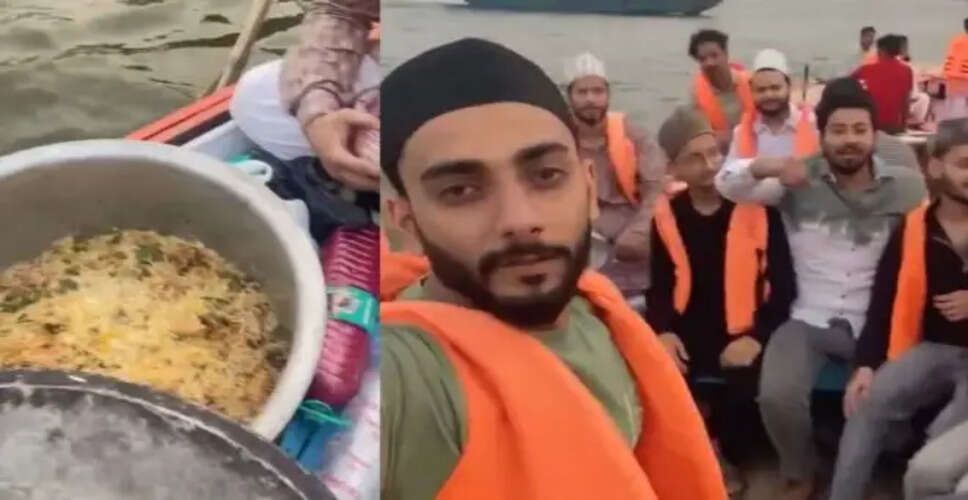
In Varanasi, authorities have detained fourteen individuals for allegedly desecrating a sacred site and offending religious sentiments. This follows the circulation of a video that reportedly depicts them enjoying chicken biryani during an Iftar gathering on a boat in the Ganga River.
The arrests were made after a formal complaint was lodged on Monday by Rajat Jaiswal, the local head of the BJP Yuva Morcha. The complaint led to the registration of a case at the Kotwali police station.
Jaiswal claimed that the Iftar event was held on a boat in the Ganga, where attendees consumed chicken biryani.
He emphasized the significance of the Ganga to followers of Sanatan Dharma, noting that countless devotees visit Kashi daily to perform rituals and offer prayers with Ganga water.
Jaiswal expressed that consuming biryani on a boat in the river and discarding leftovers was highly disrespectful. He suggested that this act was intended to offend Hindu religious sentiments.
Vijay Pratap Singh, the Additional Commissioner of Police, confirmed that a video surfaced on Monday, allegedly showing individuals partaking in an Iftar celebration on a boat while eating biryani.
The FIR includes charges under various sections, including 298 (defiling a place of worship), 299 (malicious acts to outrage religious feelings), 196(1) B (promoting enmity between groups), 270 (public nuisance), 279 (polluting public water), and the Water (Prevention and Control of Pollution) Act of 1974.