
Controversy Erupts in Arunachal Pradesh Over Minister's Remarks on Panchayat Schemes
Minister's Statement Sparks Outrage
A significant controversy has emerged in Arunachal Pradesh following comments made by a minister regarding government schemes for panchayats. Reports indicate that the minister suggested that panchayat areas where the ruling Bharatiya Janata Party (BJP) does not win will be excluded from receiving government benefits.
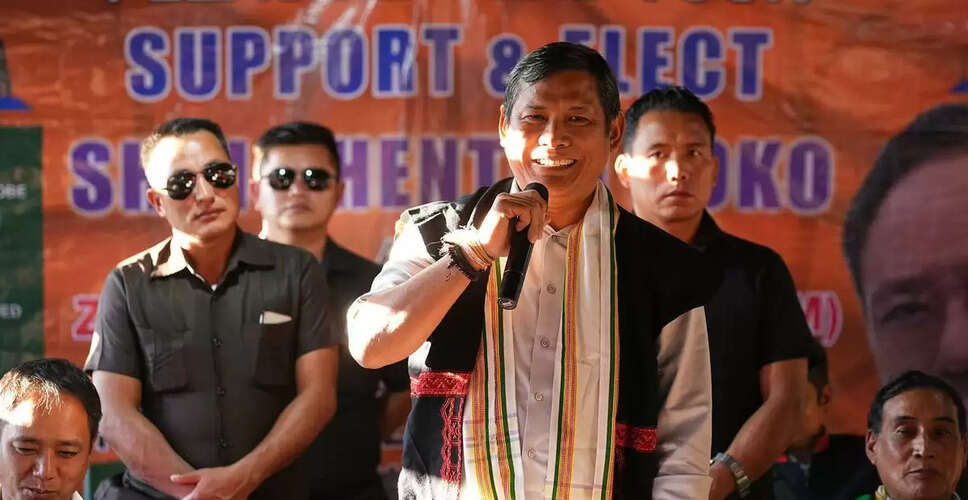
During an election rally held in the Lower Dibang Valley district, Ojing Tasing, the state's Panchayat and Rural Development Minister, stated that “government schemes will not be allocated to panchayat segments where the BJP faces defeat.” This statement was captured in videos that circulated widely on social media.
Local elections in Arunachal Pradesh are scheduled for December 15.
The Opposition Congress party condemned Tasing's remarks as “blatant and unlawful,” leading them to file a complaint with the State Election Commission, urging action against him.
According to the Congress, the minister's comments represent a direct threat to voters and an attempt to manipulate the electoral process through intimidation and the misuse of his official role.
The party argued that such statements breach the Model Code of Conduct, which is designed to ensure free and fair elections, as well as Section 123 of the 1951 Representation of the People Act, which categorizes undue influence and threats as corrupt practices.
The Model Code of Conduct outlines guidelines for candidates, political parties, and governments during elections, covering various aspects such as speeches and election manifestos.
Taru Talo, Secretary of the State Election Commission, confirmed that he has requested a report on the situation from the district deputy commissioner.
As of now, Tasing has not issued any comments regarding the controversy.