
Controversy Erupts at Dhaka University Over Jinnah's Portrait

Dhaka University Faces Backlash Over Historical Alterations
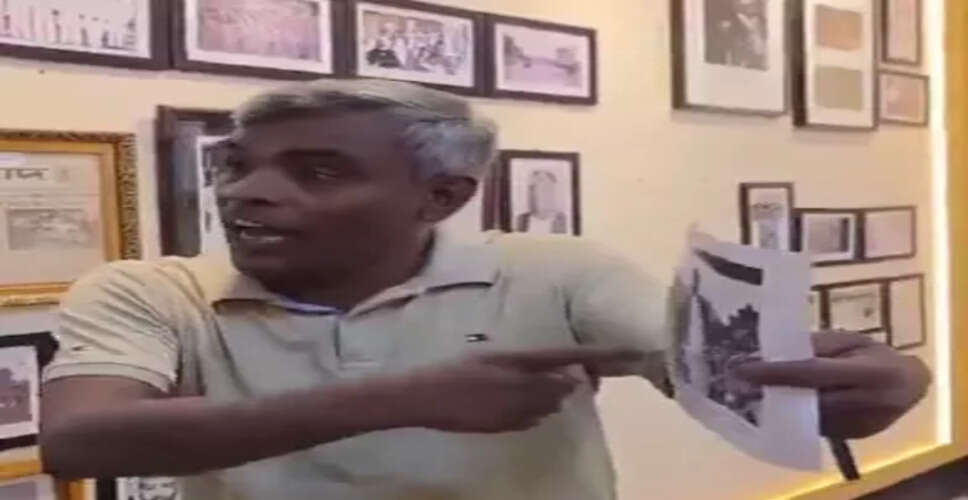
At Dhaka University, Abu Tayyab Habildar reportedly entered DUCSU and smashed a portrait of Jinnah.(Photo: Screengrab of a video)
Dhaka, Sep 16: The University Teachers’ Network in Bangladesh has expressed strong disapproval regarding the unauthorized alterations made to the photo gallery of the Dhaka University Central Students’ Union (DUCSU). Reports indicate that significant historical images, including one of independence leader Bangabandhu Sheikh Mujibur Rahman, were taken down and replaced with a portrait of Muhammad Ali Jinnah, the first Governor-General of Pakistan.
According to media sources and findings from their own investigation, the network highlighted the troubling removal of documents and images that depict the March 25, 1971 massacre and other atrocities committed on campus by the Pakistani military and their local allies, including the Razakars and Al-Badr.
The network emphasized that the DUCSU Museum is a “protected site” within Dhaka University, asserting that any modifications to such university-sanctioned structures must receive prior administrative consent, as reported by a leading local newspaper.
“Student leaders should not be allowed to make arbitrary changes driven by personal preferences, political agendas, or extremist ideologies,” they stated.
They voiced strong opposition to the display of Jinnah’s portrait, recalling his resistance to the recognition of Bengali as a state language during the Language Movement in what was then East Pakistan, as well as Pakistan’s ongoing failure to formally apologize for the 1971 genocide against the Bangladeshi people.
According to the network, placing Jinnah’s portrait in a memorial dedicated to the sacrifices of Dhaka University students is “a serious affront to the Bengali nation.”
They further criticized the removal of Sheikh Mujib’s image from the DUCSU Museum, especially at a time when negative sentiments towards his daughter, former Prime Minister Sheikh Hasina, are being projected onto him, calling it “insensitive” and a deliberate attempt to erase historical heroes.
The network described the incident as a move by “certain extremist factions to promote an anti-liberation political agenda, which is unacceptable to the faculty and students of Dhaka University.”
They characterized the museum as a national heritage site, not the property of any specific group, and called for an independent investigation beyond the university’s internal review, along with administrative and legal actions against those responsible.
Additionally, they demanded a thorough and transparent inventory of all items that were removed, along with the restoration of the photographs and memorials to their original positions.
This incident follows a series of attacks on sculptures, murals, and monuments across Bangladesh that commemorate the 1971 Liberation War and other significant historical events, which were destroyed or damaged during the protests in July-August 2024.