
Controversy Erupts After NIA Court Acquits All Accused in 2008 Malegaon Blast Case
A significant controversy has arisen after a special NIA court acquitted all seven accused in the 2008 Malegaon blast case. Key witness Milind Joshi has alleged that there was a deliberate attempt to politicize the investigation and fabricate evidence against senior RSS officials, including Yogi Adityanath. Joshi claims he faced torture and pressure to implicate others. The court's decision to dismiss all charges has reignited discussions about the case, which resulted in six deaths and over 100 injuries during a sensitive period in 2008. This article delves into the allegations and the implications of the court's ruling.
| Aug 1, 2025, 20:04 IST
New Allegations Surface Post-Acquittal
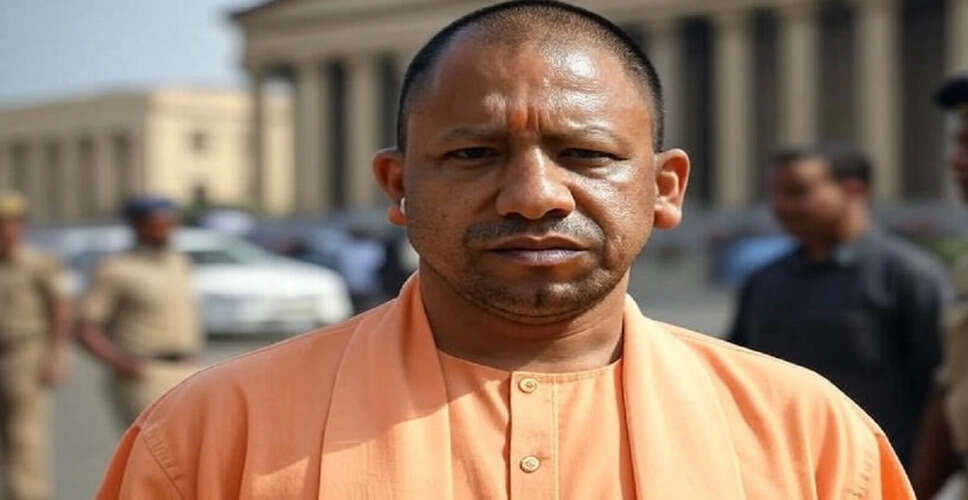
Following the acquittal of all seven defendants in the 2008 Malegaon blast case by a special court of the National Investigation Agency (NIA), a fresh controversy has emerged. Milind Joshi, a key witness in the case, has made serious allegations, claiming that there was an intentional effort to politicize the investigation and fabricate evidence to arrest a senior RSS official. Joshi asserted that he was tortured while in custody and pressured to implicate senior leaders of the Rashtriya Swayamsevak Sangh (RSS), including the current Chief Minister of Uttar Pradesh, Yogi Adityanath, who was merely a Member of Parliament at that time.
Pressure to Name Yogi Adityanath
Joshi alleged that there was significant pressure to mention Yogi Adityanath's name. He noted that in 2008, Adityanath was not as prominent as he is today, yet there were clear attempts to falsely accuse him and others under the guise of 'Hindu terrorism.' He recounted being detained and tortured, with fabricated evidence being created against him. Joshi further explained that while the Maharashtra Anti-Terrorism Squad (ATS) was officially conducting the investigation, officials from the Central Bureau of Investigation (CBI) were also involved in the questioning. He remarked, "It was strange that some CBI officers from Delhi were interrogating us, and they were extremely aggressive. I am not sure if they had jurisdiction at that time, but they were certainly involved and employing intimidation tactics.
Details of the Investigation
He elaborated that in 2008, Yogi Adityanath was not the significant figure he is today. Back then, he was just a Member of Parliament, and there was considerable pressure on them to name him. The investigation was officially under the Maharashtra ATS, but it was surprising that some CBI officers from Delhi were also questioning them. Joshi expressed uncertainty about whether the case fell under the CBI's jurisdiction at that time. He noted that the CBI officers from Delhi were particularly rude and intimidating, while the Maharashtra ATS officials were also applying pressure.
Court's Acquittal Decision
These revelations came to light after the court's decision to acquit all accused, including former BJP MP Sadhvi Pragya Singh Thakur and Lieutenant Colonel Prasad Shrikant Purohit, due to lack of evidence. The court dismissed all charges under the Unlawful Activities (Prevention) Act (UAPA), the Arms Act, and sections of the Indian Penal Code (IPC). The Malegaon blast occurred on September 29, 2008, near the Bhikku Chowk mosque in Malegaon, Nashik district. The explosion, caused by a bomb attached to a motorcycle, took place during the holy month of Ramadan and just days before Navratri, resulting in the deaths of six individuals and injuries to over 100 others in this communally sensitive area.