
Controversy Arises Ahead of RSS Chief Mohan Bhagwat's US Visit
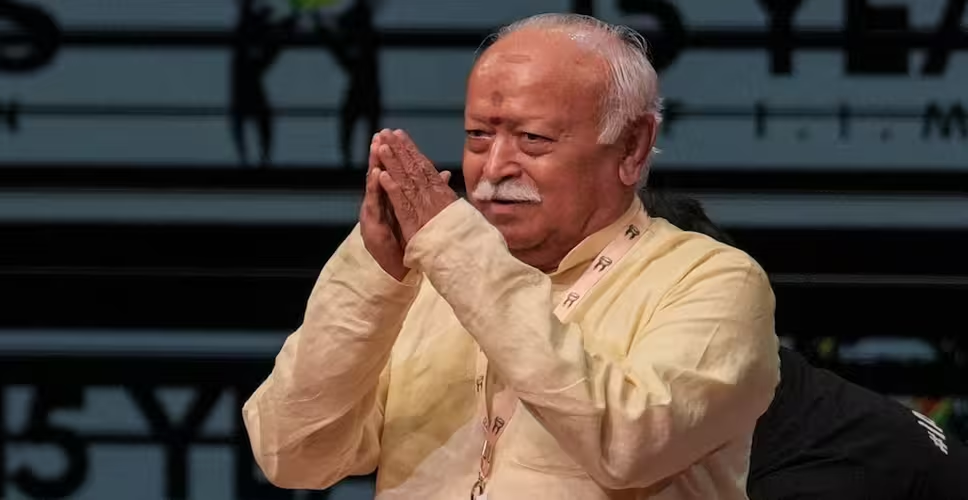

USCIRF Raises Concerns Before Bhagwat's Trip
The upcoming visit of Mohan Bhagwat, the leader of the Rashtriya Swayamsevak Sangh (RSS), to the United States has sparked a new controversy due to comments made by the U.S. Commission on International Religious Freedom (USCIRF). Officials from USCIRF have urged the U.S. administration to consider imposing targeted sanctions against individuals associated with the RSS and to exclude its leaders from high-level meetings or diplomatic honors.
Bhagwat's Arrival in New York
Reports indicate that Mohan Bhagwat is scheduled to arrive in New York on August 29 to participate in the 'Universal Oneness Celebrations.' This event is linked to the Indian-American community and focuses on themes such as unity, social engagement, and global harmony. Bhagwat's visit is part of the RSS's global outreach in its centenary year.
USCIRF's Position
USCIRF officials have cited allegations of religious freedom violations against certain RSS members as the basis for their call for sanctions. Commissioner Jean Mills stated that RSS leaders, regardless of their ties to the Indian government, should not be honored with high-level meetings or diplomatic recognition.
The 2026 annual report from USCIRF also includes the RSS among organizations whose members are recommended for targeted sanctions due to serious allegations related to religious freedom.
Understanding USCIRF's Authority
It is crucial to clarify that USCIRF is not the U.S. government and cannot enforce sanctions on its own. This independent federal advisory commission was established by Congress to provide recommendations to the U.S. government on issues of religious freedom. Any actual sanctions or government actions would require a separate process by the U.S. administration.
Thus, labeling USCIRF's request as a U.S. ban on the RSS would be inaccurate.
India's Previous Objections to USCIRF Reports
India has previously expressed objections to USCIRF's reports, often dismissing them as biased and selective. Following the latest comments, it is likely that questions will arise regarding the commission's impartiality and assessments.
In response to USCIRF's criticisms, India has also raised issues concerning attacks on Hindu temples in the U.S. and alleged threats or intimidation against the Indian-American community.
Political Tensions Surrounding Bhagwat's Visit
Mohan Bhagwat's upcoming visit coincides with the RSS's efforts to enhance dialogue with the Indian diaspora during its centenary celebrations. Consequently, USCIRF's remarks have intensified political and diplomatic discussions surrounding this trip.
Currently, Bhagwat's itinerary appears to be primarily focused on Indian-American and community events. It is important to note that USCIRF's comments are merely recommendations and do not constitute any enforced government sanctions. Attention will now turn to whether the U.S. administration takes any action on this request and what level of official meetings Bhagwat will have during his visit.