
Controversial Remarks by Assam CM Spark Political Debate

Political Controversy Arises in Assam
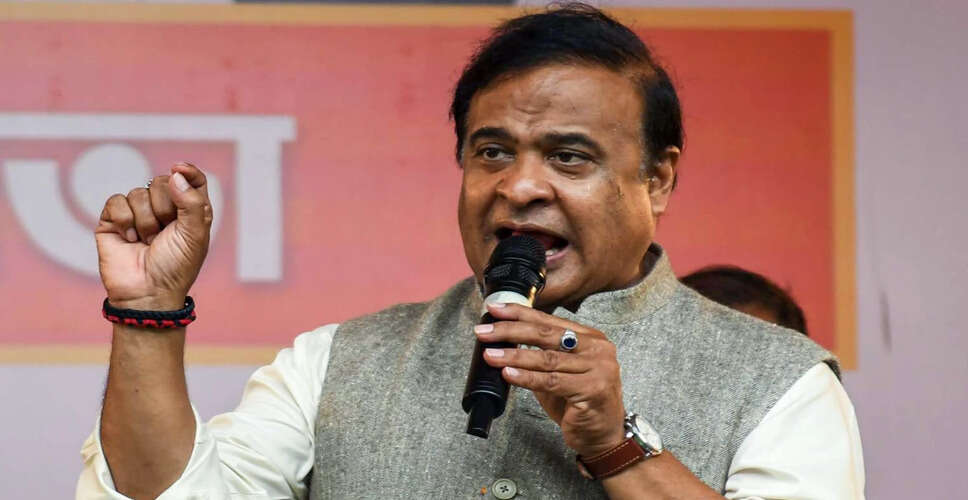
Assam's Chief Minister Himanta Biswa Sarma has made a shocking and controversial statement. He suggested that if the people of Assam wish to create murals of revolutionaries in public spaces, they should depict Paresh Barua, the leader of the banned separatist group ULFA (I), instead of the Latin American Marxist revolutionary Che Guevara. This statement, advocating for a rebel leader who supports secession from India, has ignited a new political and cultural controversy in the state. The issue began after the removal of a mural dedicated to the late cultural icon, renowned singer and actor Zubeen Garg.
Zubeen Garg's Mural Removal Sparks Outrage
Sarma also hinted at restricting various images of Zubeen Garg, stating that only Garg's wife, Garima Saikia Garg, would be authorized to release an official version of his image, which all artists would need to adhere to. The controversy surrounding the mural stems from Garg's death in September 2025, which led to a period of mourning in Assam and one of the largest funerals witnessed.
Public Reaction to the Mural's Removal
The removal of Zubeen's mural in June, part of a beautification campaign ahead of a visit from Japanese Prime Minister Sanae Takaichi, has caused significant backlash, as he is revered as a cultural icon in the region. Following the removal, artist Marshall Barua, who originally created the mural, produced a new painting of Zubeen. Sarma claimed that those responsible for the mural's removal were 'true Assamese' who failed to recognize it as Zubeen's work due to its 'Che Guevara style.'
Sarma's Controversial Suggestions
Sarma suggested that if revolutionary images were to be created, they should feature local figures like Paresh Barua and activist Parag Das. He stated, 'If you want to depict a revolutionary, make it Barua. He has been fighting for 30 years—right or wrong is another matter.' While Barua leads the ULFA (I) from abroad, Parag Das was murdered during the 'secret killings' in Assam in 1996. Sarma acknowledged that he might not support Barua but insisted that local revolutionaries should be depicted.
Criticism of Sarma's Remarks
However, the promotion of a rebel leader associated with numerous killings in the 1980s and 1990s cannot be overlooked. While Sarma elevated Barua, he downplayed Guevara, an Argentine revolutionary idolized by youth worldwide. Sarma admitted he was unaware of Guevara before the controversy but later researched his connection to the Cuban revolution led by Fidel Castro.
Sarma's Allegations Against the Painter
Sarma accused painter Marshall Barua of being affiliated with the CPI(M)'s student organization, the Students Federation of India (SFI). However, Barua, who wears a hat similar to Guevara's, denied any connection to the SFI in a video posted on Instagram, stating, 'I wear this hat because I admire Che Guevara.' He emphasized that Guevara's romanticism inspired his admiration.
Government's Stance on Zubeen Garg's Images
Sarma indicated that the government would allow painters to create only a specific image of Zubeen Garg in public spaces, which must be based on Garima Saikia Garg's approved version. Garima questioned the removal of the mural, asking if it made Guwahati look 'dirty' or if it was unnecessary. While Sarma claimed ignorance about Guevara, Zubeen Garg had expressed inspiration from the revolutionary. Ironically, in attempting to discredit the artist, Sarma inadvertently promoted a rebel leader still fighting for Assam's separation from India.