
Contrasting Economic Landscapes: Jammu and Kashmir vs. Pakistan-Occupied Kashmir
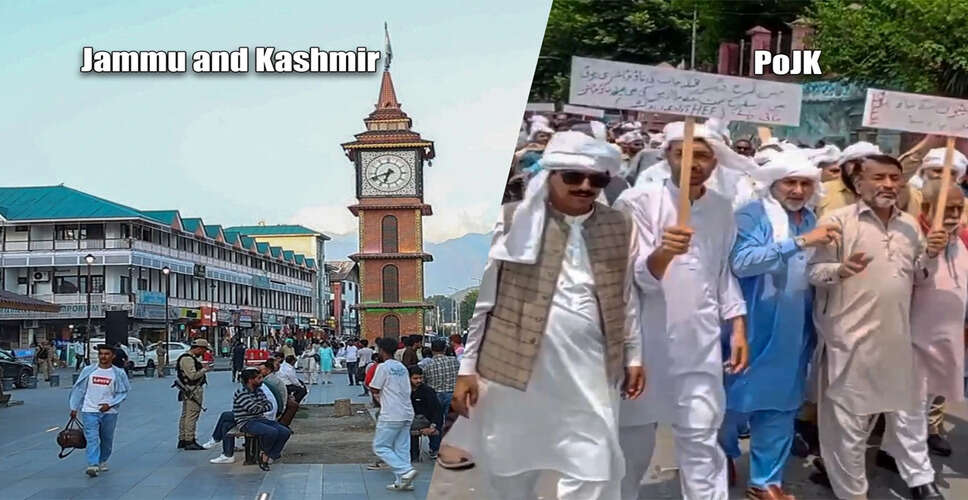

Economic Growth in Jammu and Kashmir
The situation in Jammu and Kashmir compared to Pakistan-Occupied Jammu and Kashmir (PoJK) reveals a stark contrast. While Jammu and Kashmir, now a Union Territory, is witnessing significant economic growth and infrastructure development, PoJK is grappling with economic hardships, political instability, and frequent protests. According to a report by the Comptroller and Auditor General (CAG) regarding the financial matters of the Union Territory for 2024-25, Jammu and Kashmir has shown consistent economic advancement over the past five years. The Gross State Domestic Product (GSDP) rose from ₹1.68 lakh crore in 2020-21 to ₹2.62 lakh crore in 2024-25, with per capita income increasing from ₹1.01 lakh to ₹1.55 lakh during the same period. The report also highlights a significant rise in expenditures on development projects.
Increased Spending on Social and Economic Sectors
In 2024-25, the combined share of spending on social and economic sectors reached 62% of total expenditures, indicating a stronger focus on development-oriented areas. The CAG noted that the ratio of total expenditure to GSDP decreased from 37.66% in 2020-21 to 31.45% in 2024-25. This suggests that as economic activities expand, the region's economy is becoming less reliant on government spending. In contrast, PoJK faces escalating socio-economic challenges. The official unemployment rate in this area stands at 11%, while youth unemployment has surged to 27%, prompting educated young individuals to seek better opportunities elsewhere.
Poverty and Discontent in PoJK
Poverty remains a significant concern, with the official poverty rate at 12.65%. However, ongoing economic pressures have put approximately 18.6% of the rural population at risk of falling below the poverty line. The deteriorating economic conditions have led to widespread dissatisfaction among the residents. People have repeatedly protested against rising electricity tariffs, increasing food prices, and what they perceive as poor governance.