
Construction of Elevated Railway Corridor in Deepor Beel Commences
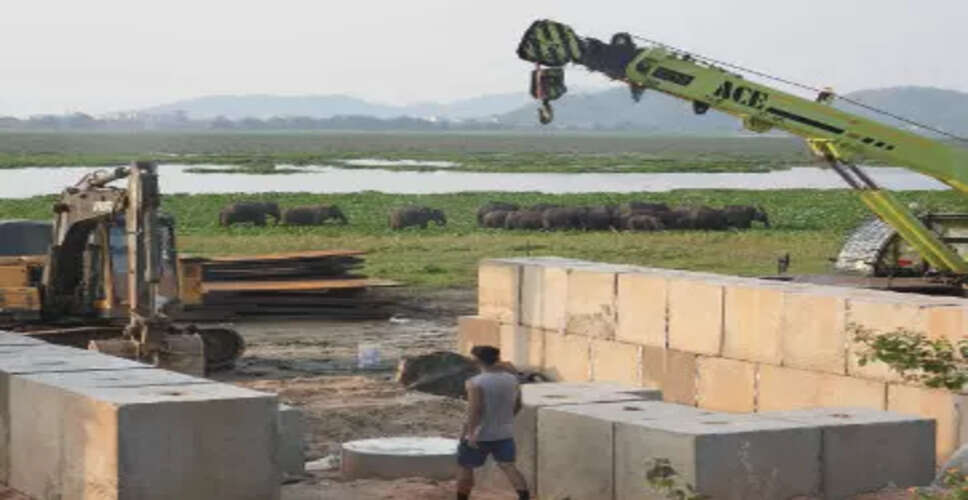

Initiation of Elevated Railway Corridor Project
Construction begins for elevated railway corridor in Deepor Beel (Photo: AT)
Guwahati, June 13: Following recent protests regarding tree cutting in the Deepor Beel region, the construction of the elevated railway corridor has officially commenced. The Northeast Frontier Railway (NFR) aims to complete this project by March 2028.
This ₹536-crore project is designed to provide a sustainable solution to the frequent train-elephant collisions occurring in this vital wildlife corridor.
NFR's Chief Public Relations Officer, Kapinjal Kishore Sharma, stated, “We are striving to finish the project by March 31, 2028, or even sooner.”
The initiative includes the development of a 4.7-km elevated railway viaduct through the Deepor Beel area, which has witnessed numerous elephant fatalities due to train incidents over the years.
Alongside the viaduct, the project encompasses the construction of retaining walls, embankments, minor bridges, track work, overhead electrification, and the necessary signalling and telecommunication systems.
Sharma mentioned that the contract was awarded to M/s SPSCIPLMGCPL (JV), with the agreement finalized in January 2026. “Currently, site clearance is in progress, and preliminary tasks, including the construction of test piles, have already begun,” he added.
The elevated corridor is intended to effectively resolve the train-elephant conflict by segregating railway operations from the routes used by elephants.
Currently, trains traversing this section are restricted to a permanent speed limit of 30 km/h due to the wildlife corridor.
In response to ecological concerns, Sharma assured that construction is being conducted in compliance with the guidelines set by the Forest Department.
He also noted that NFR will maintain collaboration with forest authorities to implement measures aimed at reducing environmental impact.
Sharma reported that there are no significant challenges hindering the project, and work is advancing as scheduled. Upon completion, the corridor will eliminate the necessity for trains to travel through the elephant corridor at ground level.
“This project will improve the safety of train operations and enable higher speeds, as the current speed limit of 30 km/h on this section will be lifted,” he concluded.