
Congressional Report Reveals Ongoing Terrorism Challenges in Pakistan
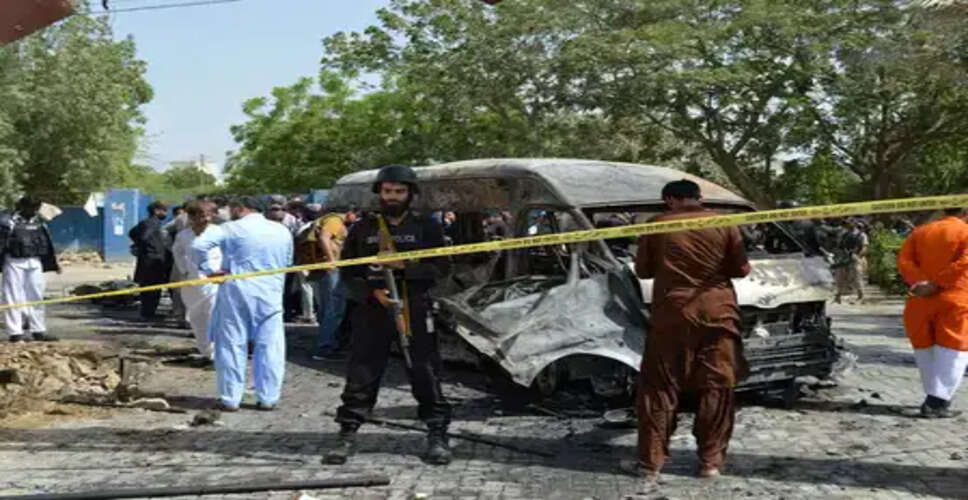
Persistent Terrorism in Pakistan Despite Military Efforts
Washington: A recent report from Congress highlights that terrorist organizations continue to thrive in Pakistan, despite extensive military actions and policy initiatives aimed at curbing their influence. The findings indicate that these efforts have not succeeded in dismantling the various US- and UN-designated terrorist factions operating within the country.
The independent Congressional Research Service (CRS) report categorizes Pakistan as both a hub and a target for a multitude of militant groups, many of which have been active since the 1980s.
These groups are classified into five main categories: those with global ambitions, those focused on Afghanistan, groups targeting India and Kashmir, domestic militants, and sectarian organizations.
The CRS, which serves as a research arm for the US Congress, produces reports to assist lawmakers in making informed decisions, although these documents do not represent official Congressional views.
According to the report, 12 out of 15 identified groups are recognized as Foreign Terrorist Organizations under US law, with most driven by extremist Islamist ideologies.
In recent years, Pakistan has experienced a significant surge in terrorist activities. After a decline in fatalities that saw numbers drop to 365 in 2019, the death toll from terrorism has risen sharply, reaching 4,001 in 2025—the highest figure in over a decade.
The report emphasizes that Pakistan is currently the nation most affected by terrorism, a situation exacerbated by the resurgence of militancy following the Taliban's takeover in Afghanistan in 2021.
Among the globally oriented factions, Al Qaeda remains active in the region, although its core has been severely weakened and it has formed alliances with other militant groups.
The Islamic State's affiliate in the region, known as Islamic State-Khorasan Province, is estimated to have between 4,000 and 6,000 fighters and operates across both Afghanistan and Pakistan, recruiting from former militants.
Groups focused on Afghanistan, such as the Haqqani Network, continue to conduct cross-border operations, boasting several hundred core members and an estimated 3,000 to 5,000 armed militants, linked to numerous attacks in Afghanistan.
The CRS report also notes that several groups targeting India remain active. Lashkar-e-Taiba, responsible for the 2008 Mumbai attacks, and Jaish-e-Mohammed, associated with the 2001 Indian Parliament attack, continue to operate from within Pakistan and aim to change the status of Kashmir.
On the domestic front, Tehrik-i-Taliban Pakistan is identified as the most lethal terrorist organization in the country, with an estimated 2,500 to 5,000 fighters, seeking to overthrow the Pakistani government and impose Sharia law.
Additionally, separatist violence has escalated in Balochistan, with the Balochistan Liberation Army, designated as a terrorist group in 2025, targeting infrastructure and foreign nationals, particularly those involved in projects linked to China.