
Congress President Targets Government Over China Relations and Border Tensions
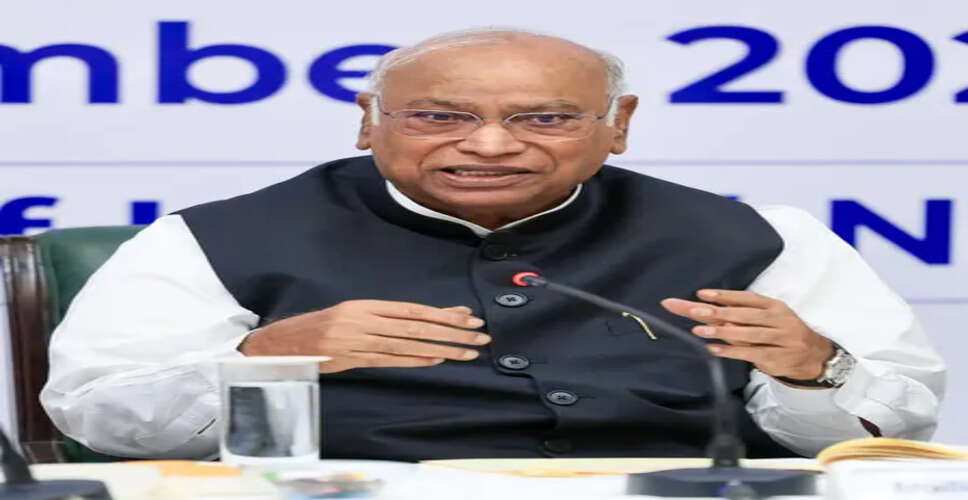

Kharge Criticizes Government on India-China Relations
Congress President Mallikarjun Kharge has directed criticism at the central government regarding the ongoing tensions at the India-China border and the overall relationship between the two nations. He has urged Prime Minister Narendra Modi to address issues related to national security, the increasing trade deficit with China, and the outcomes of diplomatic discussions between the two countries. Kharge emphasized that instead of repeatedly giving China a clean chit, the government should clarify the actual situation to the public.
Concerns Raised Over Border Tensions
On October 23, 2026, Kharge raised questions on the social media platform X, responding to a statement from the Director General of the Indo-Tibetan Border Police (ITBP), Shatrughan Kapoor, who indicated that clashes between Indian and Chinese troops were ongoing in several locations in Arunachal Pradesh.
Kharge pointed out that the ITBP chief's remarks raise serious concerns about the border situation. He referenced previous clashes in Doklam and Galwan, questioning whether a serious situation was once again developing along the India-China border.
He also mentioned reports of alleged incursions by Chinese soldiers near the Taxing area in Arunachal Pradesh's Upper Subansiri district, rather than Tawang, as previously reported in August. Kharge questioned why clashes continue despite core commander-level talks in the Vacha-Damai area and whether Indian soldiers' patrol access has been affected. He demanded that the government provide clear information regarding the border situation.
Rising Trade Deficit with China Under Scrutiny
Kharge did not limit his criticism to border disputes; he also questioned the government's handling of economic relations with China. He claimed that since the Galwan conflict, imports from China have surged by 102%, while the trade deficit has escalated by 155%, reaching $112.16 billion.
He inquired why, amid increasing trade imbalance, the government is considering easing restrictions on Chinese investments and allowing certain eligible China-related projects to benefit from the Production Linked Incentive (PLI) scheme. Kharge sarcastically asked if 'Make in India' has now become 'Import from China,' presenting these figures and allegations in his statement.
Demand for Clarity on Diplomatic Outcomes
Kharge also questioned the results of ongoing meetings and diplomatic talks between India and China. He asked why there is still a lack of clarity regarding the border situation despite multiple rounds of discussions and whether Indian soldiers have fully regained access to areas they patrolled before May 2020.
He asserted that mere diplomatic meetings are insufficient for national security; tangible results must also be evident. Kharge called on the Prime Minister to assure Parliament and the public about the border situation.
Government's Response to Border Clashes
In light of the reports of clashes at the border, the spokesperson for the Ministry of External Affairs, Randhir Jaiswal, stated that tensions sometimes arise when Chinese soldiers deviate from established patrol protocols. He noted that both countries are utilizing existing diplomatic and military channels to resolve disputes and avoid misunderstandings along the Line of Actual Control (LAC).
The Ministry also emphasized that maintaining peace and stability in border areas is crucial for the development of broader relations between the two nations.
Political Debate Intensifies Over China Policy
The alleged clashes between soldiers in Arunachal Pradesh, the growing trade deficit with China, and the outcomes of diplomatic talks have prompted Congress to demand answers from the central government. Kharge insists that transparency is essential in matters concerning national security and economic interests.
Official information regarding the actual situation at the border and the status of Indian soldiers' patrols will be critical. Currently, this issue has intensified the political debate surrounding the government's China policy.