
Congress Plans to Collaborate on Women's Reservation Bill Ahead of Special Parliament Session
In a recent Congress Working Committee meeting, party president Mallikarjun Kharge highlighted the importance of collaborating with opposition parties on the women's reservation bill. With a special Parliament session approaching on April 16, the Congress is strategizing to ensure the bill's implementation, linking it to the 2011 census data for delimitation. The proposed amendments could significantly increase Lok Sabha seats, with a focus on providing adequate representation for women. This meeting included key leaders and set the stage for upcoming legislative discussions.
| Apr 10, 2026, 17:06 IST
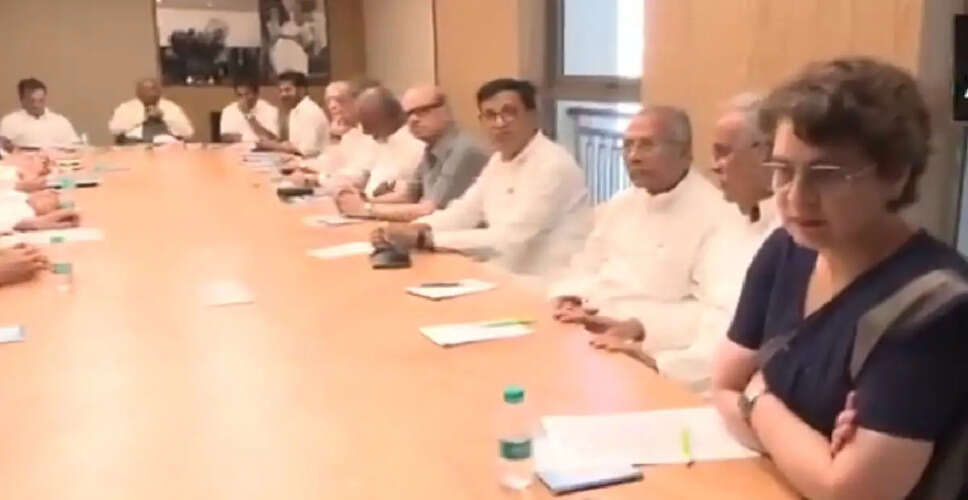

Congress Meeting Focuses on Women's Reservation
During a recent meeting of the Congress Working Committee (CWC), party president Mallikarjun Kharge emphasized the need for collaboration with opposition parties on the women's reservation issue. He noted that the proposed amendments could significantly impact the electoral system, highlighting the necessity for a unified strategy. Kharge recalled that when the bill was passed in 2023, Congress had immediately called for the implementation of women's reservation, but the government preferred to wait until after the delimitation and census. Following the CWC meeting, he stated, "We do not need approval from anyone on issues concerning the welfare of women and marginalized groups." The meeting, which took place to discuss developments related to the women's reservation bill, included prominent leaders such as Karnataka Chief Minister Siddaramaiah, Rahul Gandhi, Priyanka Gandhi, and several others.
Preparations for the Special Parliament Session
Congress Gathers Ahead of Special Session Starting April 16
The Congress party convened a meeting ahead of a three-day special session of Parliament set to begin on April 16, focusing on the women's reservation bill. This meeting comes at a crucial time as the government plans to introduce two significant amendments. The 2023 'Nari Shakti Vandan Act' links women's reservation to the new census and delimitation process. Due to delays in the census, the government intends to proceed based on the 2011 census data, which will serve as the basis for delimitation and seat redistribution. Following the amendments, the number of Lok Sabha seats could increase from 543 to 816.
Separate Delimitation Bill to Be Introduced
A separate delimitation bill will also be introduced. To ensure reservation for women, both bills must be passed as constitutional amendments. The new Lok Sabha is expected to have over 800 seats. While the current provisions for SC/ST reservations will continue, there will be no provisions for OBC reservations. Importantly, the states will not have a role in this process; the bills passed by Parliament will apply directly. Currently, there are 543 seats in the Lok Sabha, and with the proposed 50% increase, the total could rise to 816, with approximately one-third of these seats reserved for women. The government's main argument is that they will not wait for a new census to provide adequate representation for women, who make up half the population. Instead, delimitation will utilize the 2011 census data.