
Congress MP Supports Sonia Gandhi's Stance on Middle East Conflict
Congress MP Tariq Anwar has voiced his support for Sonia Gandhi's recent article addressing the Middle East conflict, emphasizing the need for India to speak the truth. In contrast, BJP leaders have criticized her stance, questioning India's involvement in international issues. Gandhi's article critiques the government's silence on the assassination of Iran's Supreme Leader, highlighting the implications for India's foreign policy. The article has sparked a significant political debate, reflecting the complexities of international relations and India's role in global affairs. Discover more about the unfolding situation and its impact on Indian politics.
| Mar 4, 2026, 12:14 IST

Congress MP Backs Sonia Gandhi's Article on Middle East Tensions
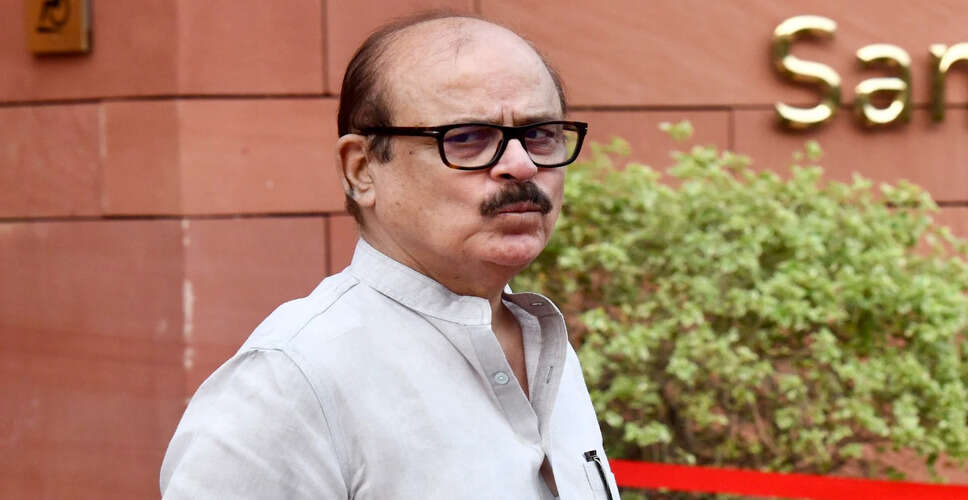
On Wednesday, Congress MP Tariq Anwar expressed his support for a recent article written by party leader and CPP chairperson Sonia Gandhi regarding the ongoing conflict in West Asia. Speaking to a news outlet, Anwar stated that Gandhi's article is entirely accurate, describing it as a well-structured and balanced piece. He noted that India's previous stance on such matters seems to have diminished, suggesting that there is now a reluctance to speak the truth.
Read More: Middle East Conflict MEA Helpline | Major Step by Central Government for Indians in Crisis, 24-Hour Control Room Established in Delhi, Helpline Numbers Released
In contrast, leaders from the Bharatiya Janata Party criticized Sonia Gandhi's article, arguing that it pertains to international policy. Maharashtra Minister Girish Mahajan questioned why India should comment on this issue, emphasizing that the country should focus on maintaining peace and questioning the relevance of the conflict to India.
Sonia Gandhi, in her article published on Tuesday, criticized the BJP-led central government for its silence regarding the targeted assassination of Iran's Supreme Leader Ayatollah Ali Khamenei, stating that this silence reflects not neutrality but a form of abandonment. She pointed out that India's lack of response signifies a tacit endorsement of this tragedy, highlighting that on March 1, Iran confirmed the death of Khamenei due to targeted attacks carried out by the U.S. and Israel. The assassination of a sitting head of state during ongoing negotiations creates a significant rift in contemporary international relations, and New Delhi's silence is equally conspicuous.
Read More: US Fighter Jets Victimized by Friendly Fire! Three US F-15s Crash Due to Kuwaiti Pilot's Error, Major Revelations in Investigation | Iran-Kuwait Conflict
On February 28, coordinated airstrikes were conducted by the U.S. and Israel targeting several cities in Iran, focusing on military command centers, air defense systems, missile sites, and critical governmental infrastructure. These attacks resulted in the deaths of Ayatollah Khamenei and four senior military and security officials, along with reports of significant explosions in Tehran and other major cities. In retaliation, Iran launched ballistic missiles and drones at U.S. bases and allies across the region, escalating the conflict in the Middle East and increasing risks for civilians and migrants.