
Congress MP Kapil Sibal Criticizes BJP Over Pollution and Governance Issues
Sibal's Strong Critique of BJP's Governance
On Saturday, Congress MP Kapil Sibal launched a fierce critique against the Bharatiya Janata Party (BJP), questioning their governance over the past 11 years and their handling of various pressing issues. He expressed deep concerns regarding the escalating water and air pollution in the country. Sibal highlighted the deteriorating law and order situation, stating that murders are rampant across the nation.
He pointed out that despite the 'Har Ghar Nal Se Jal' initiative, Prime Minister Narendra Modi has remained silent for the last five years, emphasizing that "there are neither taps nor water, only the country is burning."
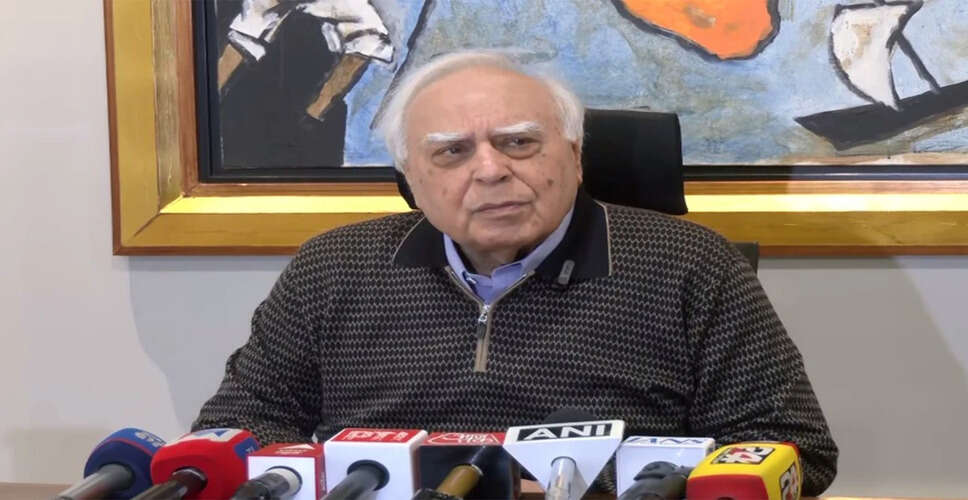
During a press conference, Sibal drew attention to the dire water situation in Indore, accusing the government of wanting to destroy the Aravalli mountain range, which supplies clean water to Delhi, in order to promote mining activities. He remarked that while the government has touted the 'tap water for every home' scheme, the reality is starkly different: "If there are no taps, there is no water, and the country is burning."
Sibal further claimed that the central government is planning to destroy the Aravalli range, which is crucial for providing clean water to the capital. He expressed alarm over the rising air pollution in the national capital, stating that the government has shown no policies to address these critical issues.
Concerns Over Basic Needs
Sibal raised a fundamental question about what every individual truly needs. He expressed a desire for the air he breathes to be clean and for the water he drinks to also be pure. He emphasized that these two essentials are what every human requires.
He stated, "In the 21st century, over the last 25 years, the BJP has governed for 15 years while the UPA has held power for 10 years. Have they considered these two critical issues? Look at Delhi: pollution has only increased over the past 11 years. Their policies have resulted in zero progress on pollution control."