
Congress MP K C Venugopal Raises Alarm Over Hasty Passage of FCRA Amendment Bill

Concerns Raised Over Parliamentary Process
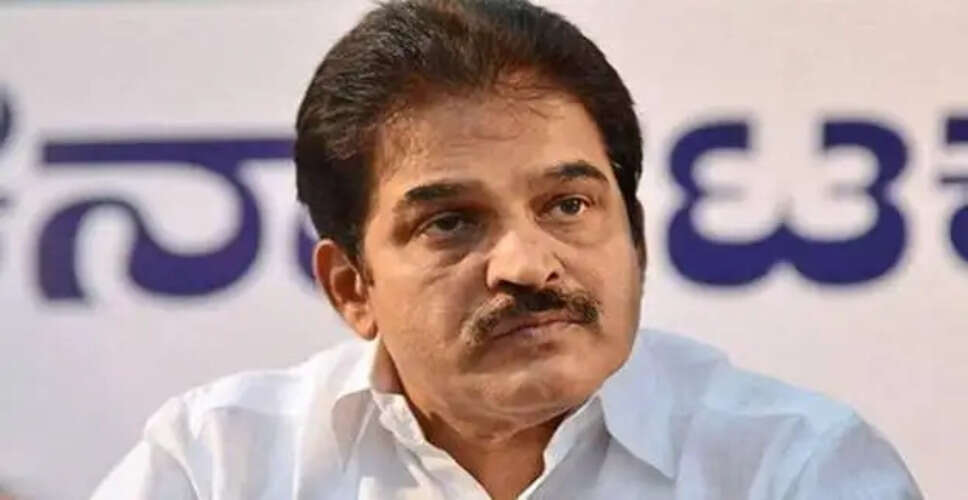
New Delhi: On Thursday, Congress Member of Parliament K C Venugopal addressed Lok Sabha Speaker Om Birla regarding the Joint Parliamentary Committee's handling of the Foreign Contribution (Regulation) Amendment Bill. He expressed concerns that stakeholders have not been adequately consulted and warned against a rushed passage of the Bill in the upcoming Winter session.
In his correspondence, Venugopal emphasized that hastily passing the Bill would undermine the purpose of its referral to the Committee, reducing a significant parliamentary process to a mere formality.
He urged Birla to ensure that the Committee actively seeks written submissions through public notices and conducts oral hearings with all impacted parties.
Venugopal also requested that the Committee be allotted sufficient time for this process, suggesting an extension of the reporting deadline if necessary, rather than adhering to a tight schedule.
He insisted that members should have ample opportunity for detailed discussions on each clause and demanded that the Bill not be presented in the House until the Committee has conducted a thorough and genuine review.
In his letter, Venugopal highlighted the manner in which the Joint Parliamentary Committee on the Foreign Contribution (Regulation) Amendment Bill, 2026 is reportedly proceeding, seeking Birla's intervention as the custodian of the House and its Committees.
The Bill was first introduced in the Lok Sabha on March 25, 2026, and has faced unanimous opposition from all Opposition parties, as its provisions are perceived to target non-governmental organizations (NGOs) and minority institutions, including schools, hospitals, orphanages, and charitable organizations that have historically supported communities across various faiths.
Venugopal pointed out that the ongoing misuse of the FCRA has already resulted in the cancellation of thousands of licenses, depriving millions of Indians of essential support in healthcare, education, and livelihood opportunities.
He noted that proposals to extend restrictions on foreign contributions to individuals and to transfer an organization's funds and assets to a government-designated authority upon cancellation or non-renewal of its registration have raised significant concerns among these institutions.
In light of these issues, the House referred the Bill to a Joint Parliamentary Committee of 31 members on August 12, 2026.
A referral to a JPC signifies the need for broader consultation and deeper examination, aimed at gathering input from all stakeholders, including NGOs, charitable organizations, religious groups, legal experts, and state governments, to present a well-considered Bill to the House.
However, Venugopal noted that it appears no substantial consultations are occurring, and there seems to be an intention to expedite the Bill's passage during the Winter Session.
He reiterated that such a move would contradict the very purpose of the Committee's formation and trivialize an essential parliamentary process.
Birla has stated that public confidence in parliamentary institutions relies on the assurance that laws impacting citizens' lives are crafted with thorough deliberation.
Venugopal expressed confidence that, in line with the esteemed traditions of Birla's office, the Joint Parliamentary Committee will fulfill its intended purpose.
In a post on X, Venugopal shared his letter to the Lok Sabha Speaker, highlighting the problematic functioning of the JPC concerning the FCRA Amendment Bill, 2026.
He underscored the sensitivity of this Bill, which has significant implications for the constitutional rights of minorities and civil society organizations.
The JPC was designed to gather input from all relevant stakeholders and conduct a comprehensive review of the draft Bill before it is finalized for re-introduction.
Today, we are left questioning whether a thorough feedback and review process has been conducted, prompting us to write to the Speaker to raise these concerns.
Venugopal concluded by asserting that any Bill emerging from a JPC should be impeccable, ensuring Parliament's confidence that it has undergone a rigorous consultation process. Without this assurance, he argued, a JPC would be a futile exercise and a disservice to Parliament.