
Congress MP Highlights GST Compliance Challenges for Small Businesses

Concerns Raised by Gaurav Gogoi
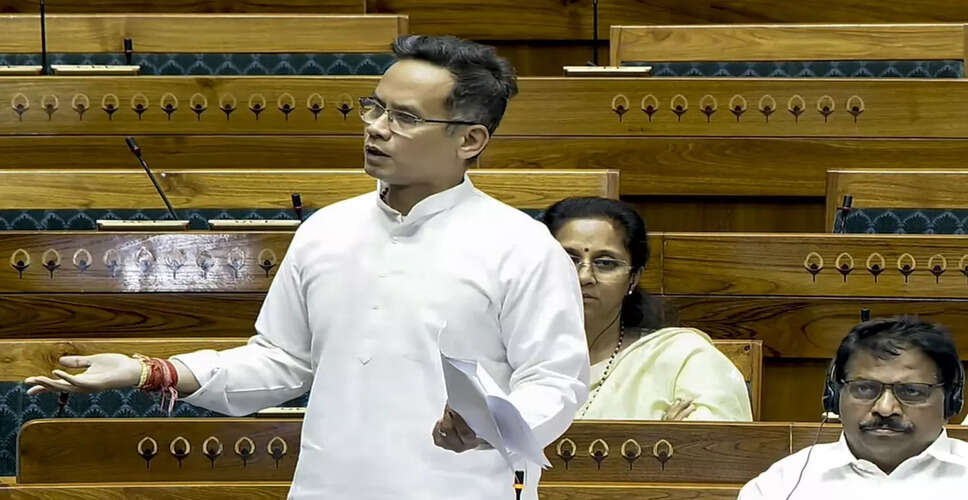
File image of Congress MP Gaurav Gogoi in the Lok Sabha. (Photo: PTI)
New Delhi, Aug 12: Gaurav Gogoi, a Member of Parliament from Congress, has expressed concerns regarding the increasing compliance challenges that small enterprises face under the Goods and Services Tax (GST) framework. He emphasized that the main issue is not the tax itself but rather the intricate compliance requirements.
In a correspondence directed to Union Finance Minister Nirmala Sitharaman, Gogoi mentioned that his discussions with local traders, entrepreneurs, and manufacturers in the Jorhat constituency have revealed ongoing struggles with GST regulations.
According to the letter, the frequent changes in GST rules complicate matters for small traders, leading to a greater reliance on tax consultants and escalating compliance expenses.
Gogoi pointed out that this issue is especially pronounced for small businesses located in rural and semi-urban regions, which often find it challenging to adapt to the changing regulations.
He also highlighted the backlog of notices from the early days of GST implementation, stating that honest taxpayers who may have made minor procedural mistakes continue to experience uncertainty and financial strain.
“Implementing a simplified and timely process for addressing these legacy issues would significantly aid small businesses and enhance their trust in the tax system,” he remarked.
Additionally, Gogoi advocated for a more rationalized GST rate structure, particularly in sectors where multiple tax brackets lead to classification conflicts, thereby increasing the compliance burden.
“A clearer rate structure would diminish confusion and make compliance easier for businesses,” he added.
Another issue raised was the denial of Input Tax Credit (ITC) due to supplier defaults, even when the purchasing business has acted in good faith and possesses valid invoices and payment proof.
Gogoi urged the government to safeguard legitimate buyers in such situations while ensuring that enforcement actions target the actual defaulters.
He also called for GST guidance and educational resources to be made available in Assamese and other regional languages.
“Small traders often depend on intermediaries for compliance because official information is not easily accessible in their native languages,” he noted.
Gogoi requested the Finance Ministry to streamline GST amendments into fewer, well-publicized cycles to enhance predictability in the compliance framework.
He proposed a transparent and timely mechanism for resolving outstanding legacy notices, protecting ITC for legitimate buyers where genuine transactions can be verified, and recovering dues from defaulting suppliers.
Among his other recommendations was the creation of district-level GST Facilitation Centres in collaboration with trade associations and professional organizations to assist small businesses with registration, filing returns, compliance, and addressing grievances.
Gogoi concluded that these measures would alleviate the compliance burden on small enterprises while fostering voluntary tax compliance, encouraging economic formalization, and building trust between taxpayers and tax authorities.