
Congress Leader Criticizes Shashi Tharoor's Views on Iran and US-Israel Relations
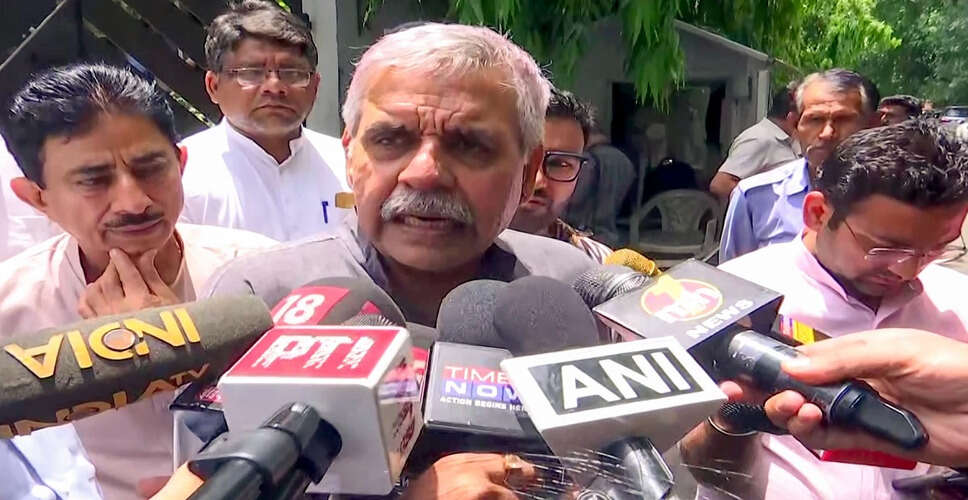
Sandeep Dikshit Challenges Shashi Tharoor's Stance
On March 20, Congress leader Sandeep Dikshit expressed his disapproval of his colleague Shashi Tharoor, stating that Tharoor had supported the Modi government's restraint regarding the US-Israel attacks on Iran. Dikshit remarked that the MP from Kerala should not be taken seriously as he often shares opinions without fully grasping the issues at hand. He intensified his critique by suggesting that the former senior UN official Tharoor focuses more on engaging politely with others rather than adhering to the tradition of Nehruvian foreign policy.
Read More: Pradyut Bordoloi Receives Ticket from Congress for Dispur, Atul Bora Dropped from BJP, Sparking Controversy
Dikshit conveyed to a news agency that he believes Tharoor lacks a comprehensive understanding of the situation. He stated that opinions expressed without proper understanding should not be taken seriously. In his view, Tharoor's comments on this matter do not reflect the thoughts of a serious individual. He warned against passively accepting such incidents, asserting that if silence prevails, exceptions will become commonplace. He cited examples of the US removing a president from Venezuela and assassinating a leader in Iran, questioning who would stop the US from similar actions in other nations if silence continues.
Furthermore, the Congress leader argued that neutrality in certain situations could lead to negative consequences for a country. He emphasized that every nation protects its interests, but larger principles also hold significance. He recalled the era of Hitler, noting that many European countries chose silence, which had dire repercussions. He cautioned that in similar circumstances, such neutrality could prove detrimental.
Read More: Grand Alliance Announced at Gaurav Gogoi's Residence, Congress and Raijor Dal Unite
Dikshit also clarified the distinction between signing a condolence book at the Iranian embassy in Delhi and the Prime Minister's silence regarding the assassination of Iran's Supreme Leader Ayatollah Ali Khamenei. He noted that while signing the book is one action, the Prime Minister's silence on such a significant event is entirely different. He asserted that the foreign secretary does not play a role in shaping foreign policy, which is primarily reflected by the Prime Minister and the Foreign Minister, emphasizing the importance of timing.